Laguiole Knives
› Free laser engraving
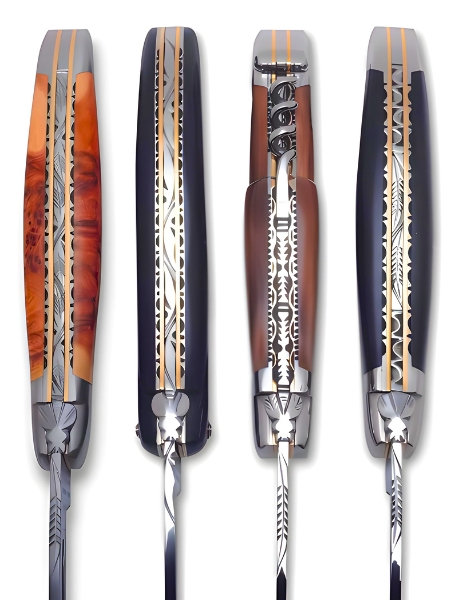
All Laguiole pocket knives
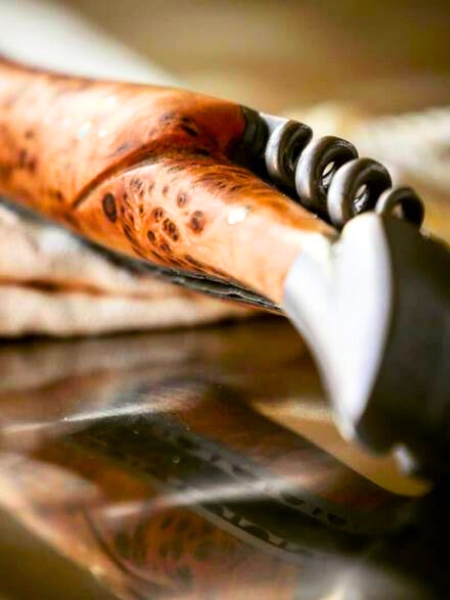
Laguiole knives with corkscrew
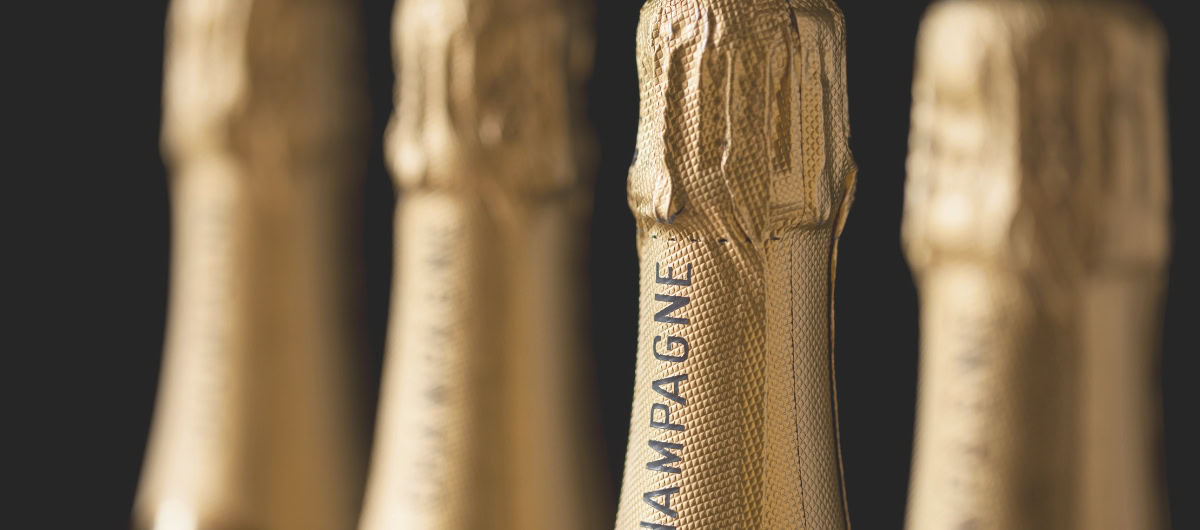
Few gestures say “celebration” like a clean, ringing sabrage. With a genuine Laguiole champagne sabre, handmade in France by Laguiole en Aubrac, the moment turns into calm theatre: poised, controlled, unforgettable. The tradition traces back to the Napoleonic era; today it lives on at weddings, milestone birthdays and New Year toasts across the UK. A Laguiole sabre marries spectacle with substance: a broad, usually blunt blade that shears the collar cleanly, and the signature curved handle that sits naturally in the hand. At roughly 45 cm, it has the presence you expect when the room falls quiet and glasses are raised. This guide is written for British hosts who want authenticity and safety in equal measure: we’ll cover where sabrage comes from, how the blade and bottle interact, exactly how to perform the technique with confidence, which handle materials suit your bar or dining room, and how to inspect fit and finish before you buy. Above all, we keep the ritual elegant and responsible, so the memory is the toast—not the clean-up.
← Back to the Champagne Sabre collection
The definitive sabrage tool: authentic Laguiole Champagne sabres with a broad, blunt blade and the classic curved handle — handcrafted in France by Laguiole en Aubrac.
Ready to browse the range? Visit the collection: → Shop Laguiole Champagne Sabres
A champagne sabre is purpose-built to travel along the bottle’s vertical seam and strike the annulus (the collar at the top of the neck). Unlike a sharp kitchen knife that might bite unpredictably, the sabre’s broad, typically blunt edge delivers a guided impact at the glass’s weakest point. For a clean break, chill the bottle thoroughly (about 4–6 °C) so pressure is stable and glass less prone to messy fractures; remove foil and wire cage; hold the bottle at roughly 45°, pointing into safe open air. Place the spine or flat of the sabre on the seam about 10 cm from the collar, then glide with confidence and strike through—do not chop. The cork departs with the ring of glass, and internal pressure expels micro-shards away from the wine. Safety is non-negotiable: eye protection, heavy cloth/gloves, no audience in the line of flight, and outdoors whenever possible. Skip sabrage on damaged or very old bottles. After the strike, keep the bottle angled, pour a small test glass and discard if you see chips. Technique refined, the result is swift, dramatic and—crucially—tidy.


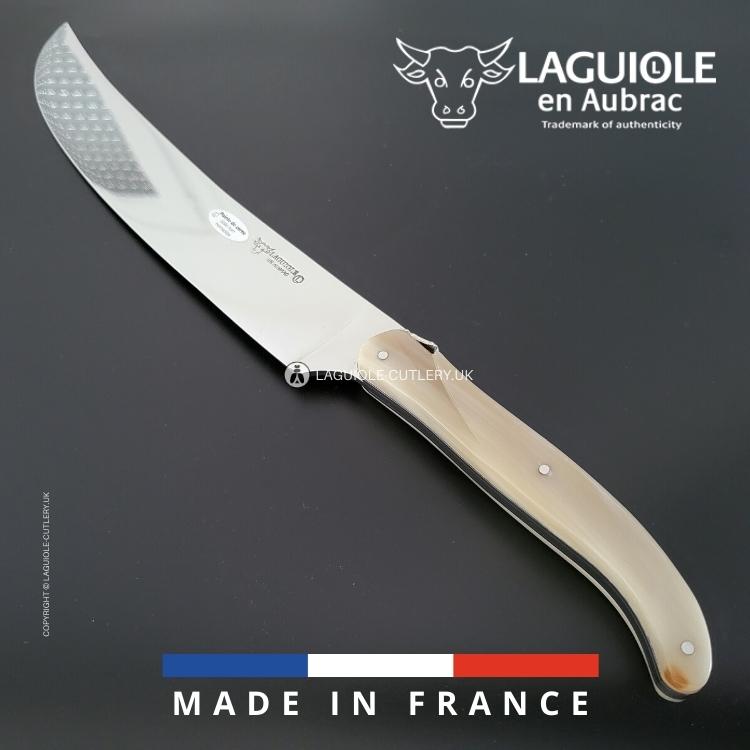
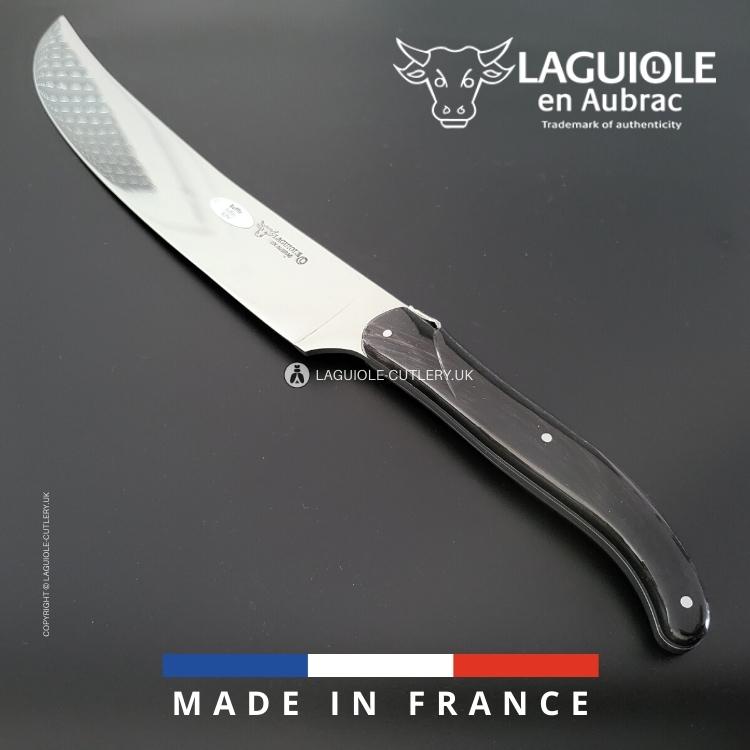
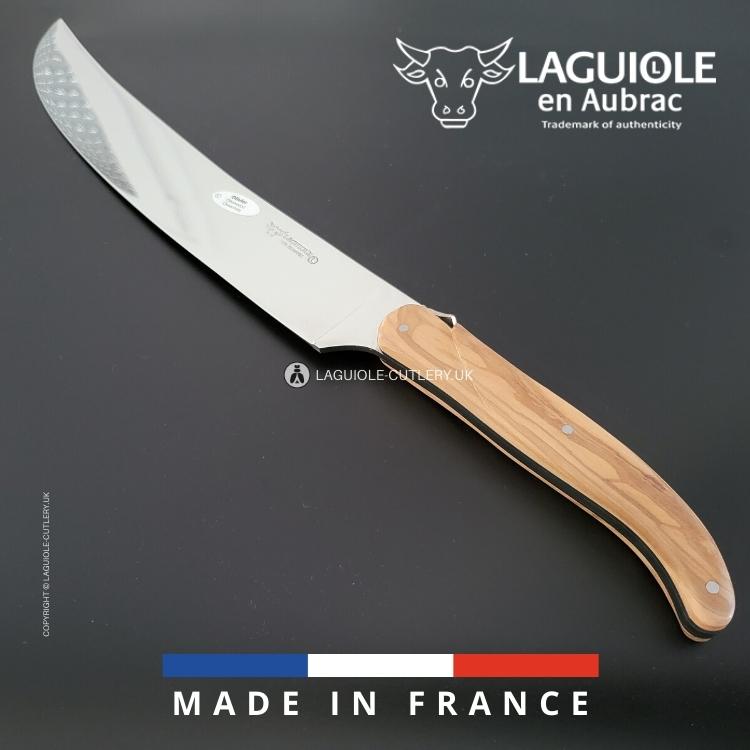
Begin with where you’ll sabre. For gardens, terraces and country venues, a sabre with reassuring heft and a smooth spine keeps the glide stable even when nerves rise. In town flats or restaurants, plan the space first: a clear line of flight is more important than any styling detail. Next, match the mood to your table. If your entertaining style leans classic—white linens, crystal, candlelight—choose a handle that reads formal and timeless. If you host relaxed evenings with stoneware and natural textures, a warmer, tactile wood is inviting. Consider your comfort level: novices benefit from a well-balanced model that naturally tracks straight along the seam; experienced hosts may prioritise presence and display. Finally, think about the moment itself. Sabrage is best as an opening act: outdoors, eyes protected, one clean gesture as guests gather; bring a second chilled bottle for pouring so service stays calm. Remember, this is a ceremony, not a party trick—choose tools and conditions that make it feel intentional, safe and memorable for the right reasons.
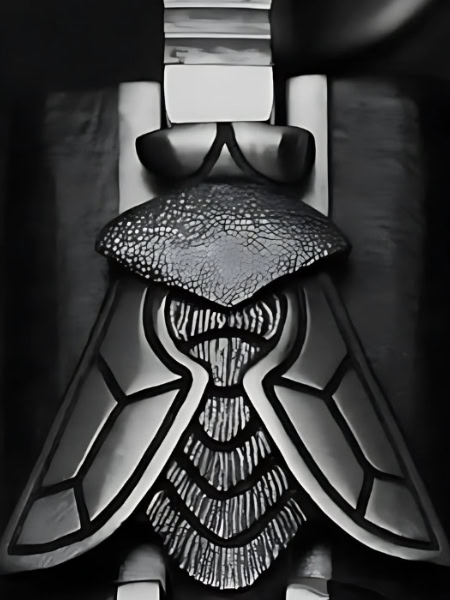
While the working geometry is consistent, the look and touch vary by material and finish. Olivewood offers golden warmth and lively grain that flatters pale linens and terracotta; Juniper shows dotted figure with a discreet natural aroma; Zebu Horn Tip delivers silky tactility and organic variation—no two handles are identical; Buffalo Horn reads darker and formal for evening bars. The curved Laguiole handle with double stainless-steel bolsters balances momentum for a straight glide, while the emblematic bee and, sur certains modèles, un dos limé à la main (guilloché) signent l’artisanat. Most references include a protective case for calm storage; some owners add a stand for display between uses. Côté personnalisation, note pratique : la gravure n’est pas disponible sur nos sabres à Champagne (gabarit incompatible avec la machine) ; préférez une carte de présentation dans l’écrin pour le message. Choisissez un matériau qui dialogue avec votre service de table et votre bar ; l’essentiel est une prise pleine et un poli qui s’essuie vite après la coupe—le raffinement doit rester simple à vivre.
Achetez lentement, vérifiez de près. Recherchez une provenance explicite : Laguiole en Aubrac, fabrication française, pas de formules floues “style Laguiole”. Inspectez l’alignement de la lame et la droiture du dos ; les mitres doubles doivent être polies de façon régulière, la bee nette, les jonctions acier/bois ou corne affleurantes sans jour. Exigez un étui de protection et des documents d’authenticité. Côté pratique UK : privilégiez un détaillant qui facture en GBP, annonce des délais clairs et propose un after-sales réactif en anglais. Préparez votre rituel : espace extérieur, EPI (lunettes, gant/torchon épais), seau ou bac pour les anneaux de verre et un second flacon déjà au frais pour le service. Entretien : essuyage à la main uniquement après usage, séchage immédiat pour préserver le poli. Sur manches en bois, appliquez ponctuellement une fine cire d’abeille pour imperméabiliser puis lustrez à sec ; n’utilisez jamais d’huile (film gras, retient la poussière). Traité ainsi, le sabre garde sa prestance et votre geste reste aussi sûr que spectaculaire.
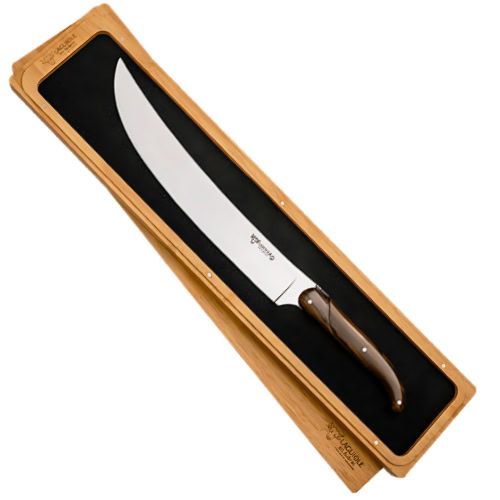
Un sabre à Champagne Laguiole transforme un simple décapsulage en cérémonie maîtrisée. La lame large (non tranchante) suit la couture, l’impact propre dégage le col en un geste sûr, et le manche courbé, équilibré par des mitres polies, donne la confiance nécessaire quand les regards se tournent vers vous. Choisissez le matériau qui parle à votre table—Olivewood chaleureux, Juniper de connaisseur, Horn noble—et un écrin qui protège la pièce entre deux fêtes. Restez fidèle à l’esprit du rituel : extérieur, sécurité d’abord, un geste net… puis le toast. Pour vos mariages, anniversaires, promotions ou réveillons, vous offrez à vos invités plus qu’une bouteille : un souvenir. Prêt à faire du premier “pop” le moment dont on parlera encore demain ?
No. A sabre is typically blunt. It doesn’t slice the glass; it rides the seam and shears the collar at the weakest point. This guided impact is why the break can be clean when done correctly.
Outdoors, with a clear line of flight. Wear eye protection and keep people, pets and property well away from the cork’s path. Never attempt sabrage indoors over guests or fragile objects.
Standard Champagne and traditional-method sparkling wines with intact glass and normal pressure. Avoid damaged, very old, re-corked or unusual bottles; the glass may behave unpredictably.
Not on our models—engraving isn’t available (sabre size incompatible). For gifting, include a presentation card in the case.
Wipe by hand and dry immediately. For wood handles, apply a very thin beeswax layer occasionally, then buff dry; never use oil (greasy residue attracts dust). Store in the protective case.

• Crafted in France, in the historic area of origin.
• Engraving and dispatch completed on the day of ordering.
• Deliveries to France, the European Union, and worldwide.
• Delivery within 48 hours in the UK. 4 days to the USA with DHL Express.
• Supplied with: certificate of authenticity, 14-page manual of genuine Laguiole knives, protective case.
COMPLIMENTARY LASER ENGRAVING
Laser engraving on the blade is an innovative technique that merges art and technology to elevate and customize a knife. Select from 6 fonts and 12 symbols.
Laguiole POCKET KNIVES
Explore our range of Laguiole en Aubrac folding knives, a hallmark of French artisanal cutlery. These premium pocket knives, blending elegance and functionality, embody the essence of traditional craftsmanship and unparalleled expertise in knife making.
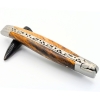
All Laguiole Folding Knives
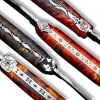
When Craftsmanship Becomes Art
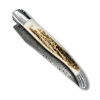
Laguiole Damascus steel blades captivate with hypnotic wave patterns
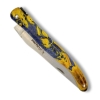
Explore the pinnacle of Laguiole artistry with our Limited & Unique Editions
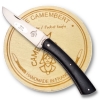
French Gastronomy Meets Fine Cutlery.
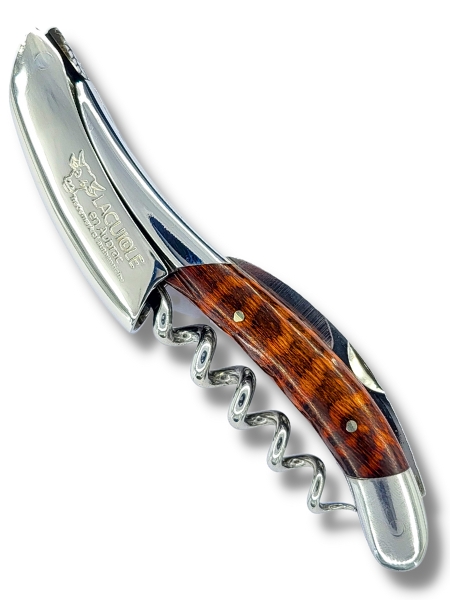
LAGUIOLE CORKSCREWS
Explore our collection of Laguiole en Aubrac sommelier corkscrews, indispensable tools for wine enthusiasts and oenology experts. Each corkscrew is meticulously crafted to the exacting standards of the renowned Laguiole en Aubrac knives.
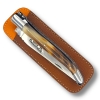
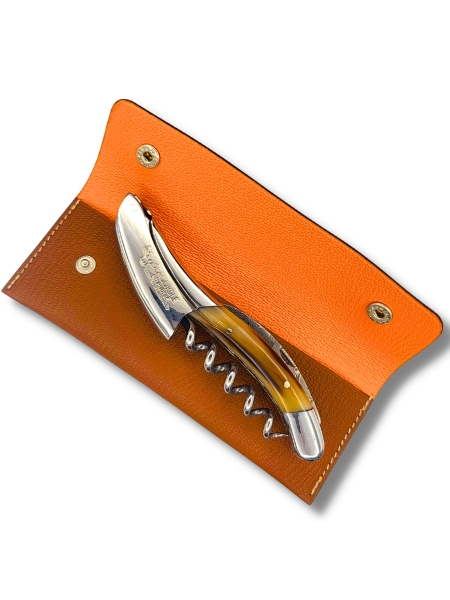
Sheaths, Box & Belt Pouches
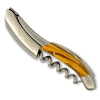
Marquetry - Wood - Horn or Bone
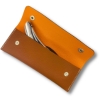
Leather Sheaths
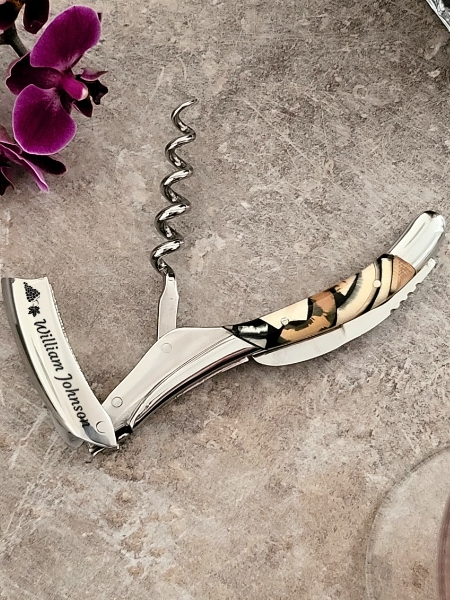
COMPLIMENTARY LASER ENGRAVING
Opting for a personalised Laguiole en Aubrac sommelier corkscrew means injecting a dash of originality into an object already renowned for its quality and aesthetics!

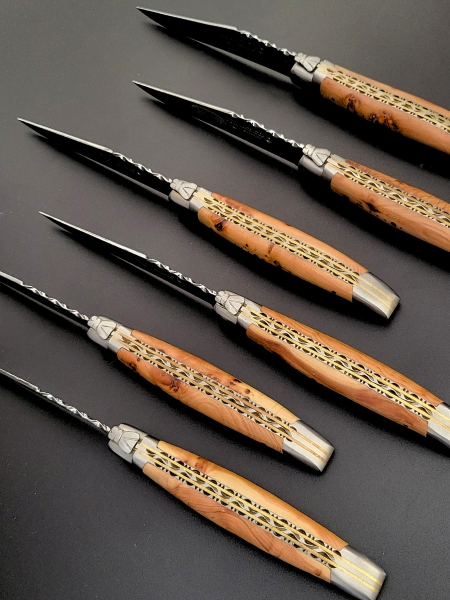
LAGUIOLE CUTLERY SETS
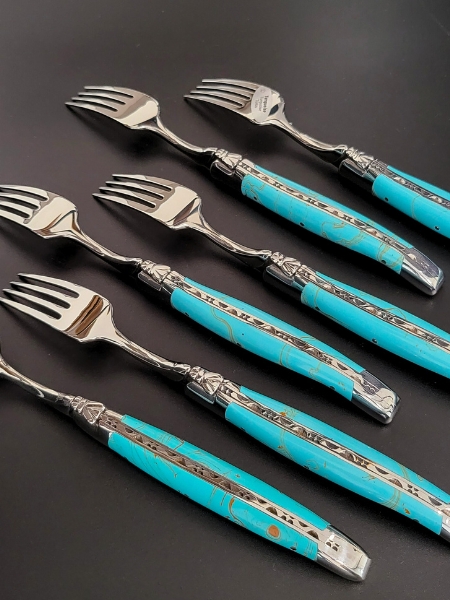
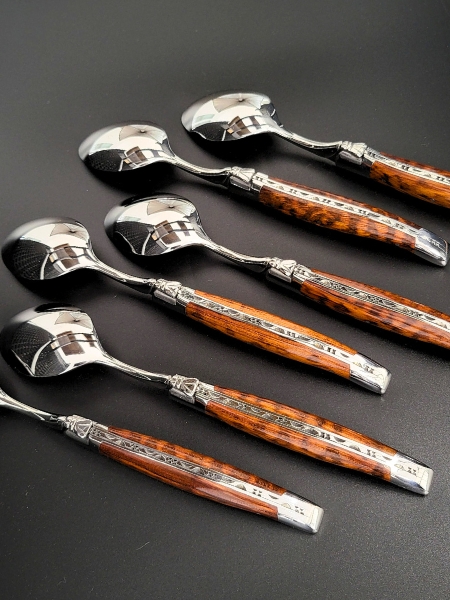
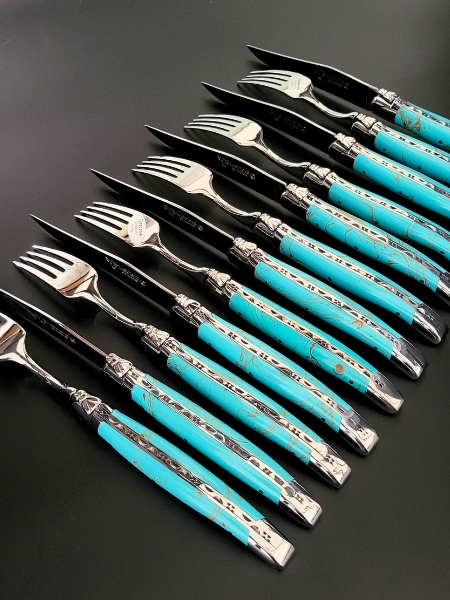
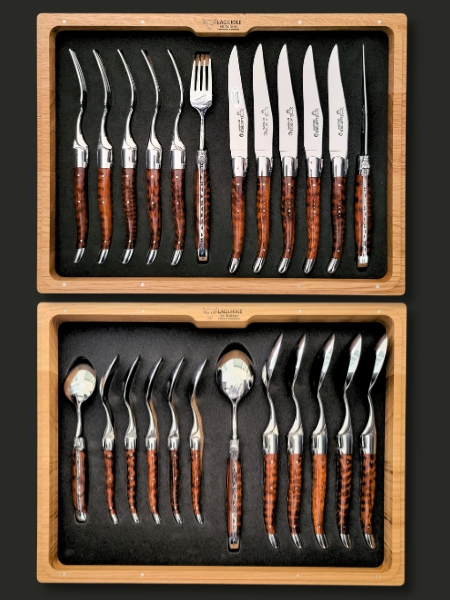
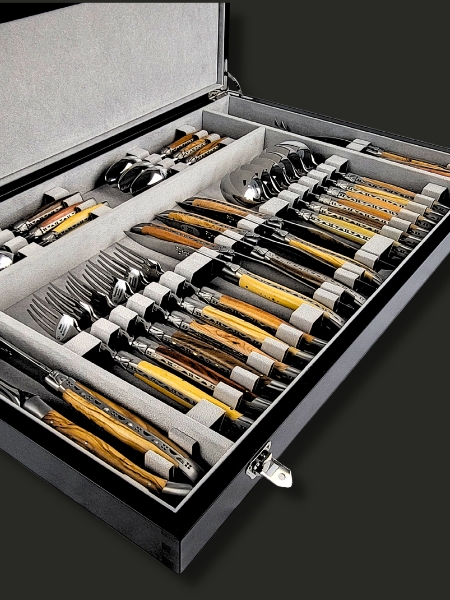
Explore our curated selection of Laguiole en Aubrac cutlery sets, ranging from classic to contemporary styles, featuring an array of vibrant and unique handle materials. Available in sets of 2, 4, or 6, with optional forks, as well as soup and dessert spoons.
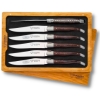
Various handle materials
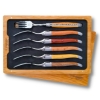
Various handle materials
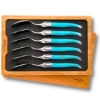
Various handle materials
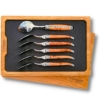
Various handle materials
Various handle materials
Various handle materials
Various handle materials
Various handle materials
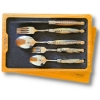
Various handle materials
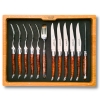
Various handle materials
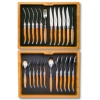
Various handle materials
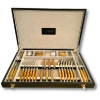
Various handle materials
Additional Knives and Sets
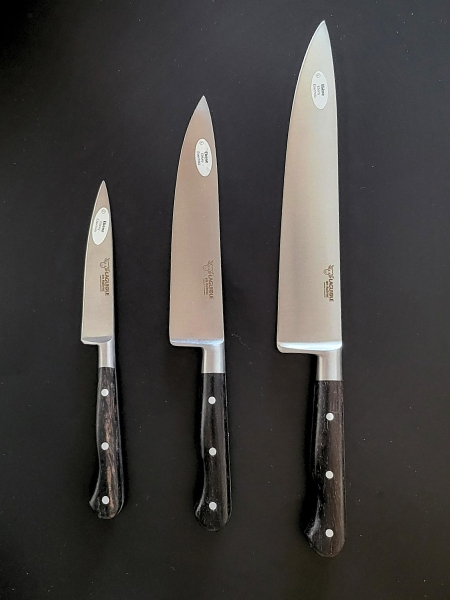
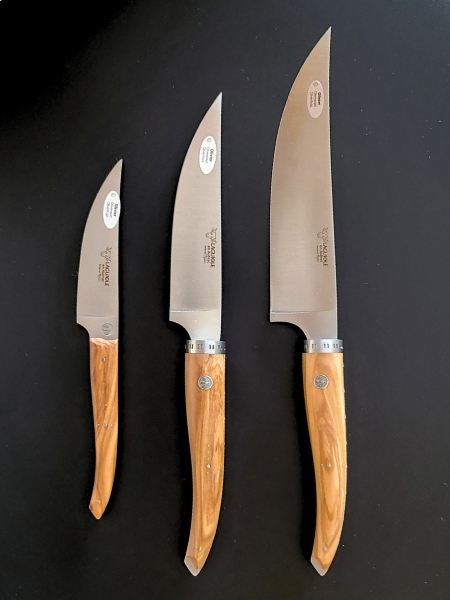
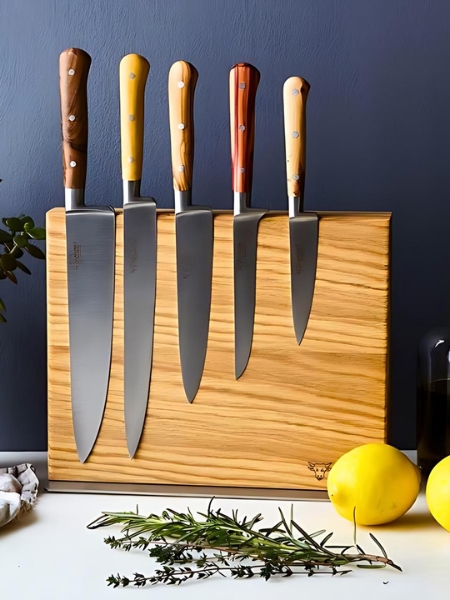
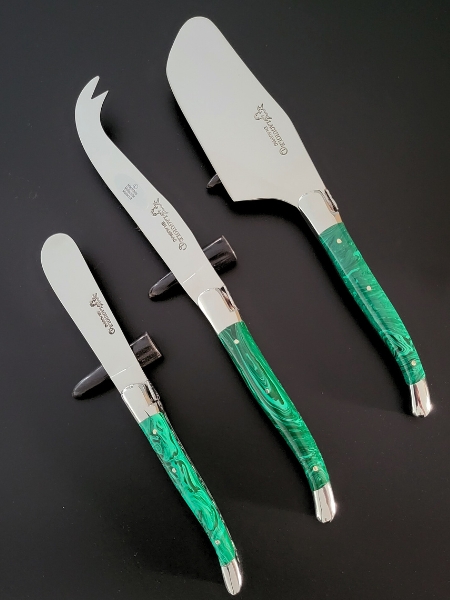
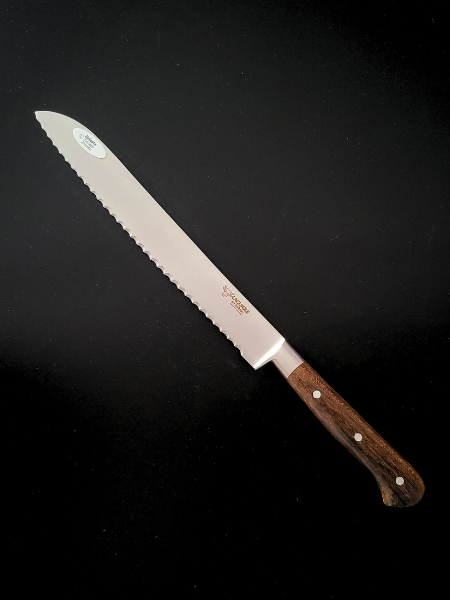
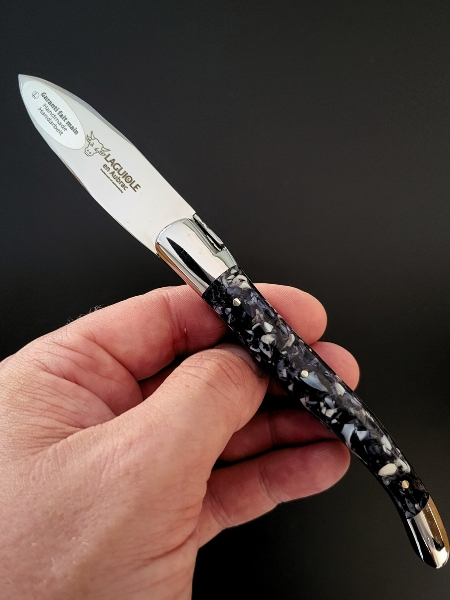
Explore our supplementary cutlery range, crafted to elevate your dining experience and provide you with an unmatched culinary journey. This sophisticated and stylish collection encompasses cheese knives, oyster knives, carving sets, and a myriad of other indispensable accessories for a meticulously arranged table.
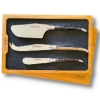
Individuals or in sets x3
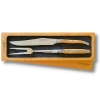
Various handle materials
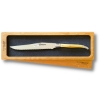
Various handle materials
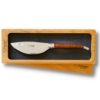
Various handle materials
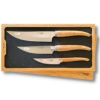
Individuals or in sets x3
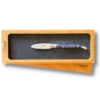
Recycled seashell handles
Various handle materials
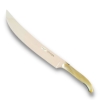
Various handle materials