Laguiole Knives
› Free laser engraving
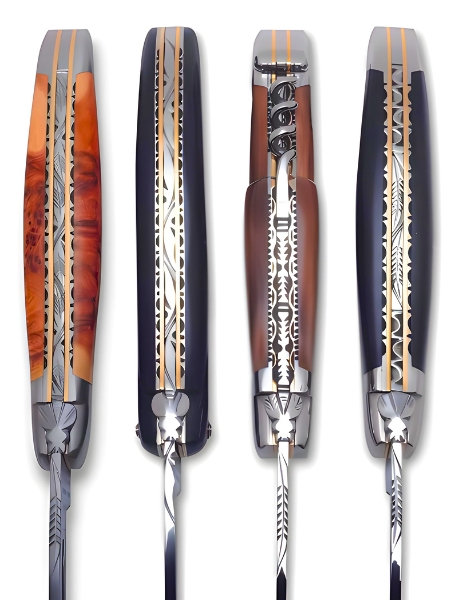
All Laguiole pocket knives
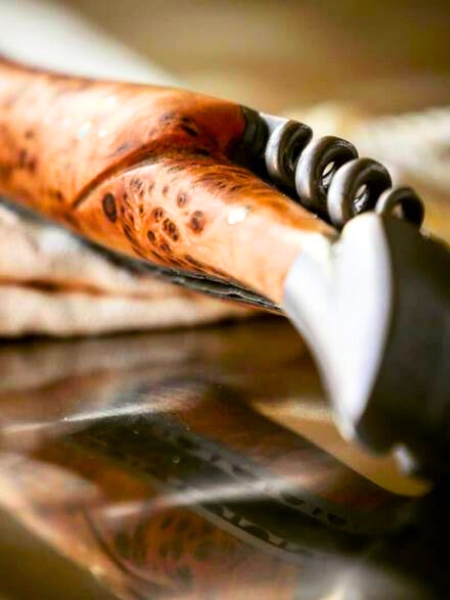
Laguiole knives with corkscrew
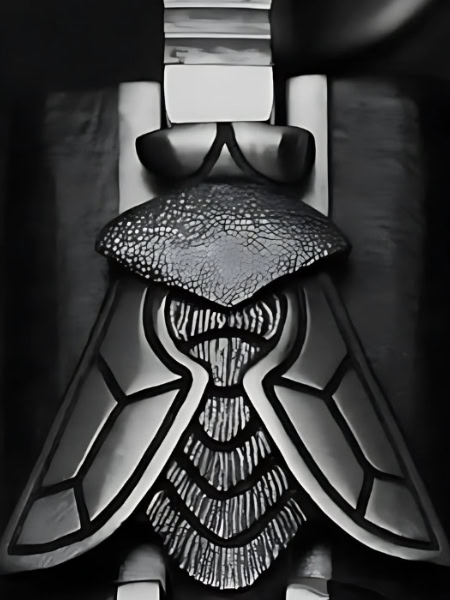
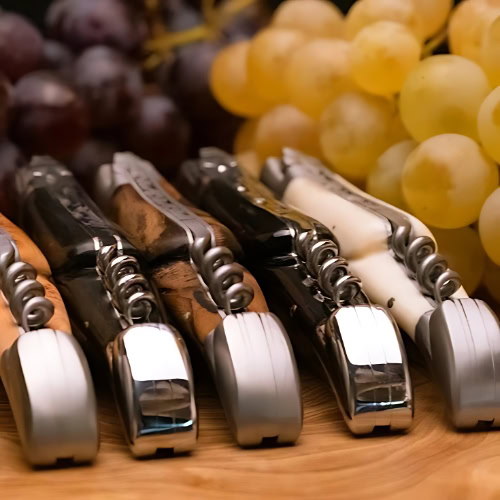
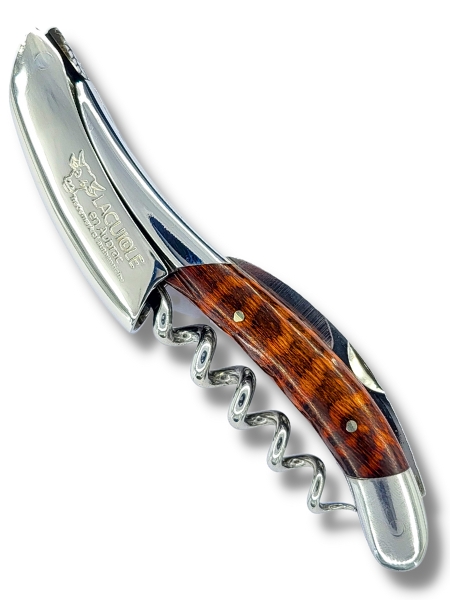
In essence, it’s a classic Laguiole folding knife—long, elegant silhouette, signature bee, tuned backspring—with a neatly integrated waiter’s-style spiral tucked into the frame. Unlike a full waiter’s corkscrew with a lever arm, the Laguiole corkscrew pocket knife keeps the profile slim and pocket-friendly. You still get a clean, controllable blade for fruit, cheese, paper and cord, plus a compact way to open a bottle at the end of a walk or on a cottage weekend.
Form: slender frame with the familiar Laguiole lines; the spiral folds flush so balance remains comfortable.
Function: two complementary actions—precise cutting and confident uncorking—without the bulk of a multi-tool.
Feeling: calm mechanics, discreet weight, and a sense of occasion when the spiral comes out.
Ready to shop? See the collection here: Laguiole Corkscrew Pocket Knives.
In essence, it’s a classic Laguiole folding knife—long, elegant silhouette, signature bee, tuned backspring—with a neatly integrated waiter’s-style spiral tucked into the frame. Unlike a full waiter’s corkscrew with a lever arm, the Laguiole corkscrew pocket knife keeps the profile slim and pocket-friendly. You still get a clean, controllable blade for fruit, cheese, paper and cord, plus a compact way to open a bottle at the end of a walk or on a cottage weekend.
On a well-made example, the spiral nests cleanly within the liners and deploys without interfering with the blade’s movement. The priorities are alignment, a positive snap when the spiral is open, and a flush fit when it’s closed so there are no hotspots against the hand. This preserves the balanced centre of gravity Laguiole is known for; the knife still feels composed in the palm, not lopsided or bulky.
Because you’re relying on the hand and wrist rather than a lever arm, the spiral’s geometry is designed for a progressive, low-effort “bite” in the cork. You turn with the wrist, the spiral advances cleanly, and extraction is a controlled pull rather than a yank. It’s hospitality with a quiet, personal rhythm.
A corkscrew pocket knife must first be a good knife. Look for a blade that opens with even resistance, seats home tidily and offers a predictable, fine edge for daily tasks. Quality stainless steel is the elegant default for UK carry: it takes an honest, working sharpness and is easy to maintain with occasional honing. In short, you’re buying a refined pocket companion that also happens to open a bottle when needed.


Think in terms of feel, mood and context. The beauty of the Laguiole language is that you can tailor personality without losing the slim, elegant profile.
Current corkscrew models on our site favour olivewood—a British favourite for its honeyed warmth—and vibrant red or green “cheesewood” for a cheerful, food-centric mood. Each piece is naturally unique in tone and figure; choose the one that fits your table and your weekends.
If you carry in a blazer, you may prefer the lightest, slimmest frame. If you wear country jackets or want a touch more gravitas in hand, select a reference with slightly more substance or brass accents. The spiral’s integration should never make the knife feel front-heavy.
Although the Laguiole corkscrew pocket knife is intuitive to use, a calm technique makes opening a bottle smoother and safer—especially when you’re outside or on the move. Keep the blade closed during all steps below.
Tips for older bottles: if the cork is brittle, go slower; if it begins to crumble, consider a dedicated lever corkscrew or a two-prong extractor. The pocket spiral is excellent for modern closures and most natural corks in normal condition.

If your life involves regular hosting, a dedicated Laguiole corkscrew with a lever remains the most efficient option at the table. The pocket format, however, is unbeatable for occasional uncorking with maximum elegance and minimum bulk.
Choose by mood and context. Olivewood reads warm and timeless; red or green “cheesewood” adds cheerful colour for food-centric gifting. Each piece is naturally unique in tone and figure.
Part of the pleasure in a genuine Laguiole is noticing details that most makers skip. These aren’t mere decorations; they indicate time and care invested in the build.
A Laguiole corkscrew pocket knife earns its place because it respects your pockets, your table and your time. It cuts cleanly, opens a bottle gracefully and looks quietly right wherever you happen to be. When you are ready, explore the current selection and choose the piece that fits your weekends and your wardrobe.
It is illegal carry any knife in public without good reason, unless it has a manual folding blade less than 3 inches long.
With a calm, steady technique it’s straightforward. The spiral’s geometry is designed for progressive bite; most modern corks extract cleanly with a controlled pull and slight twist. For very old or fragile corks, a dedicated lever corkscrew is best.
On a quality build, no. The spiral folds flush into the frame and the centre of gravity remains balanced. You should not feel hotspots through fabric or in the palm.
Choose by mood and context. Olivewood reads warm and timeless; red or green “cheesewood” adds cheerful colour for food-centric gifting. Each piece is naturally unique in tone and figure.

• Crafted in France, in the historic area of origin.
• Engraving and dispatch completed on the day of ordering.
• Deliveries to France, the European Union, and worldwide.
• Delivery within 48 hours in the UK. 4 days to the USA with DHL Express.
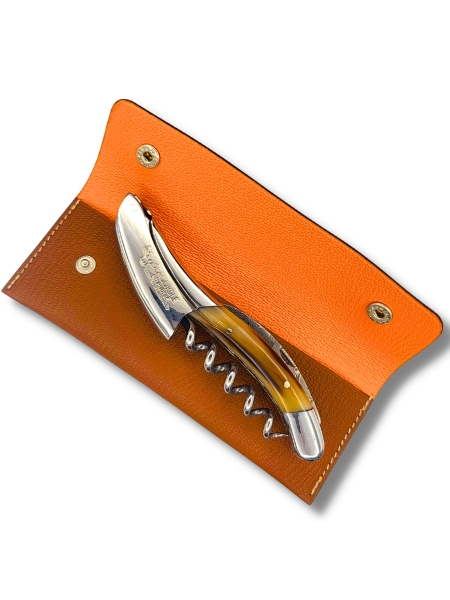
• Supplied with: certificate of authenticity, 14-page manual of genuine Laguiole knives, protective case.
COMPLIMENTARY LASER ENGRAVING
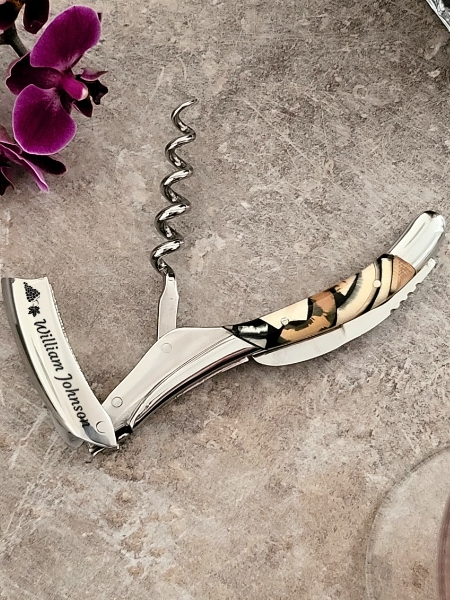
Laser engraving on the blade is an innovative technique that merges art and technology to elevate and customize a knife. Select from 6 fonts and 12 symbols.
Laguiole POCKET KNIVES
Explore our range of Laguiole en Aubrac folding knives, a hallmark of French artisanal cutlery. These premium pocket knives, blending elegance and functionality, embody the essence of traditional craftsmanship and unparalleled expertise in knife making.
All Laguiole Folding Knives
When Craftsmanship Becomes Art
Laguiole Damascus steel blades captivate with hypnotic wave patterns
Explore the pinnacle of Laguiole artistry with our Limited & Unique Editions
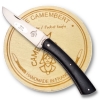
French Gastronomy Meets Fine Cutlery.
LAGUIOLE CORKSCREWS
Explore our collection of Laguiole en Aubrac sommelier corkscrews, indispensable tools for wine enthusiasts and oenology experts. Each corkscrew is meticulously crafted to the exacting standards of the renowned Laguiole en Aubrac knives.
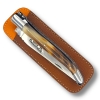
Sheaths, Box & Belt Pouches
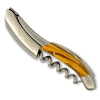
Marquetry - Wood - Horn or Bone
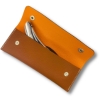
Leather Sheaths
COMPLIMENTARY LASER ENGRAVING
Opting for a personalised Laguiole en Aubrac sommelier corkscrew means injecting a dash of originality into an object already renowned for its quality and aesthetics!

LAGUIOLE CUTLERY SETS
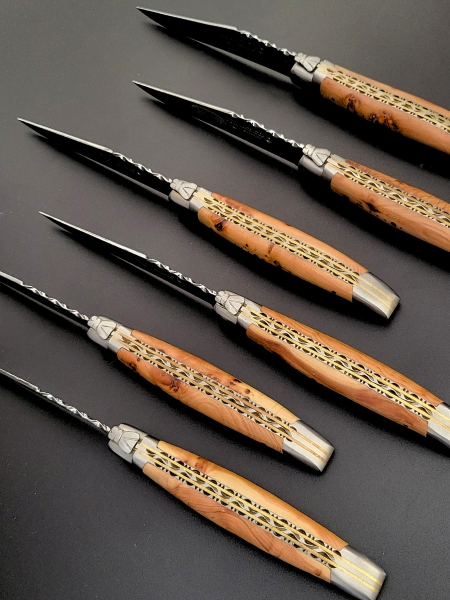
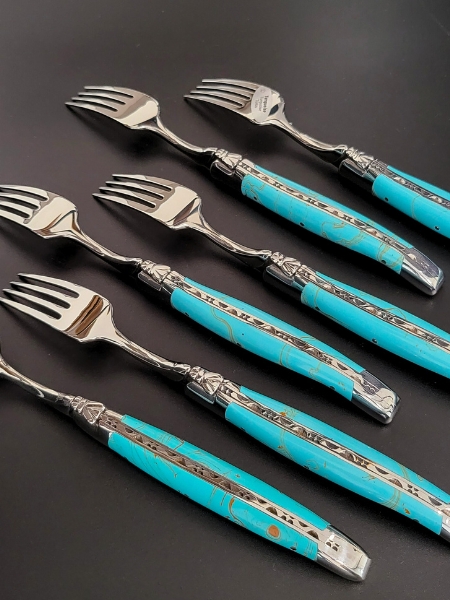
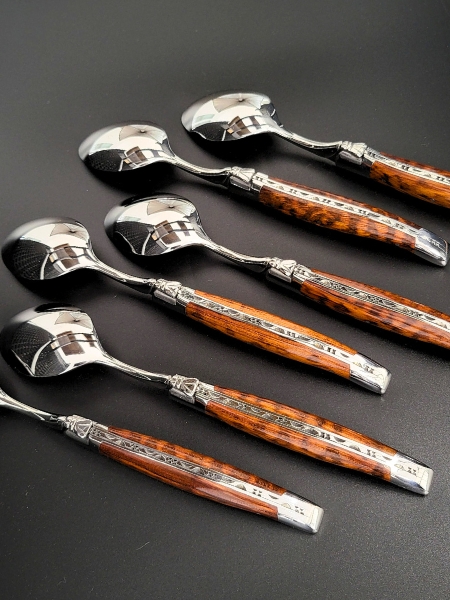
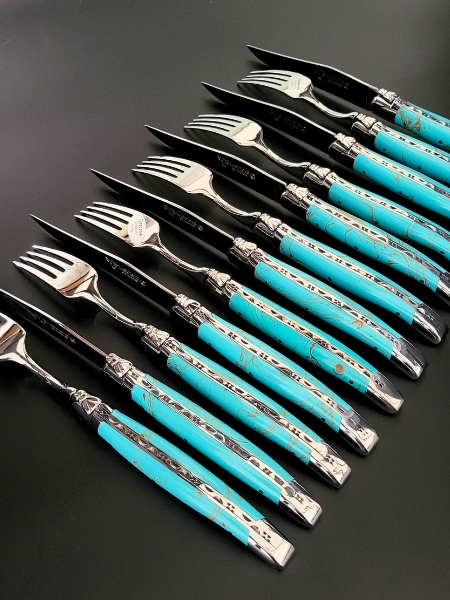
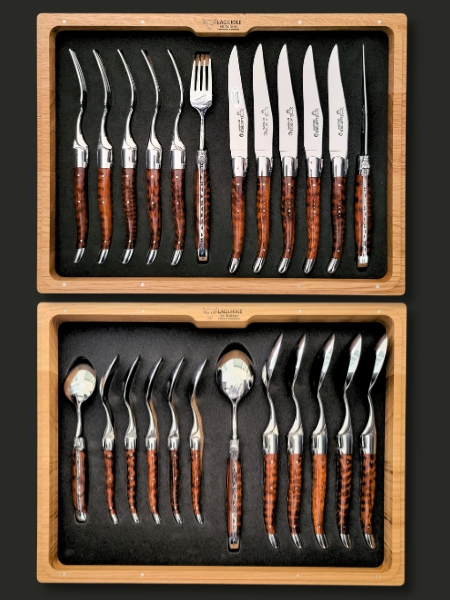
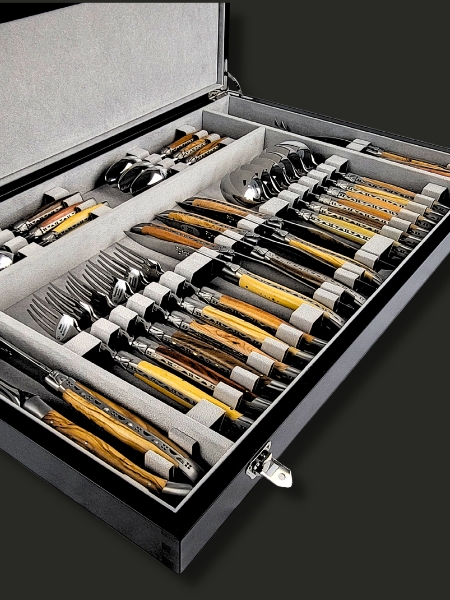
Explore our curated selection of Laguiole en Aubrac cutlery sets, ranging from classic to contemporary styles, featuring an array of vibrant and unique handle materials. Available in sets of 2, 4, or 6, with optional forks, as well as soup and dessert spoons.
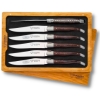
Various handle materials
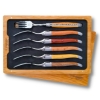
Various handle materials
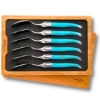
Various handle materials
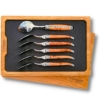
Various handle materials
Various handle materials
Various handle materials
Various handle materials
Various handle materials
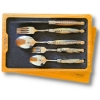
Various handle materials
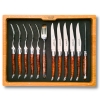
Various handle materials
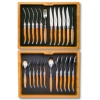
Various handle materials
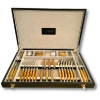
Various handle materials
Additional Knives and Sets
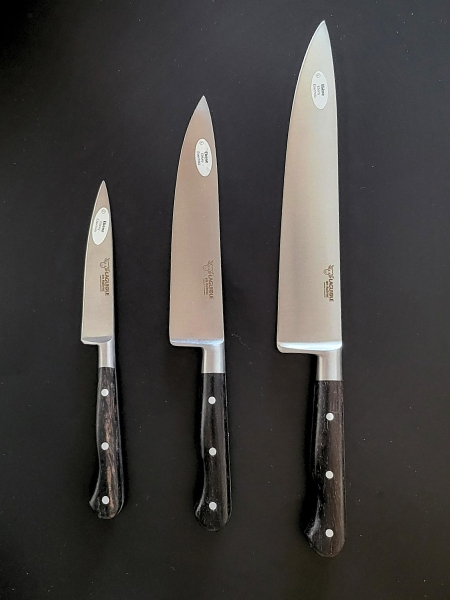
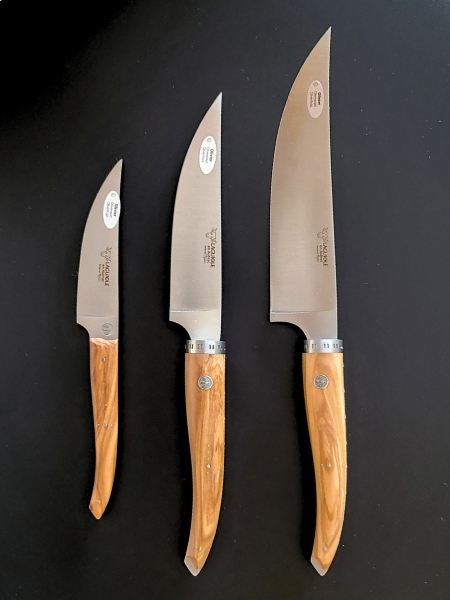
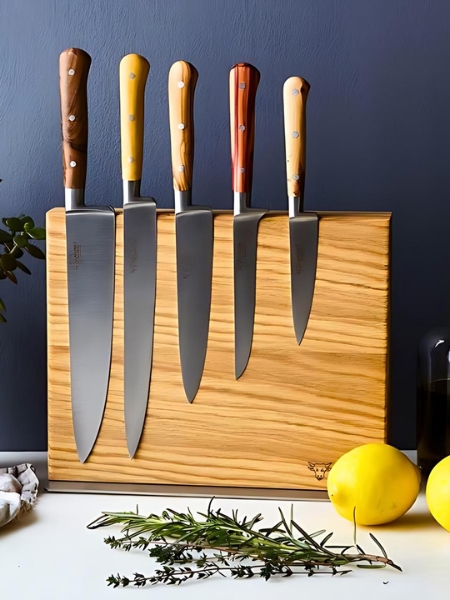
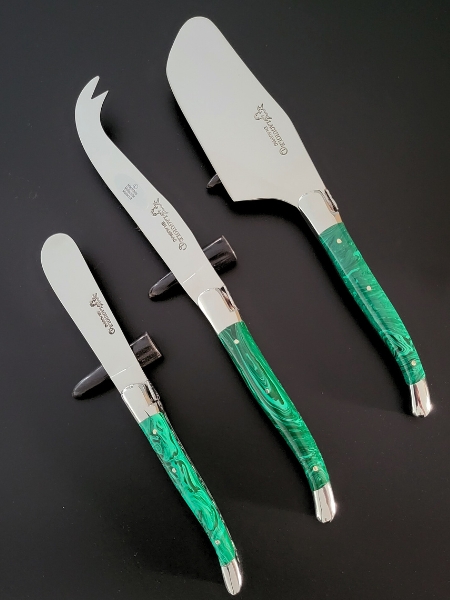
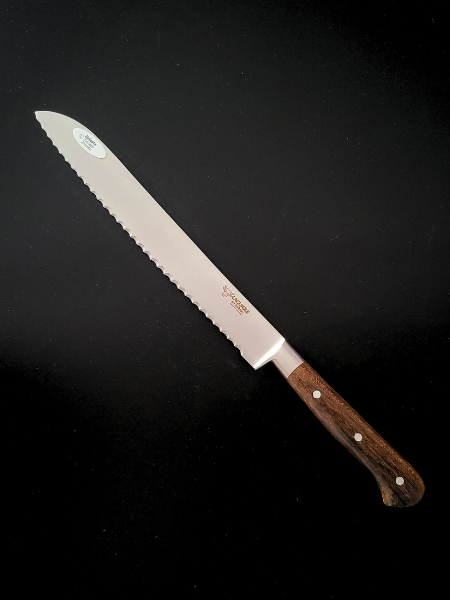
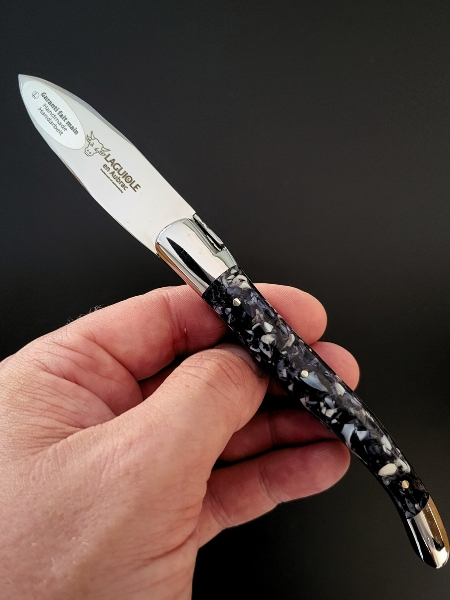
Explore our supplementary cutlery range, crafted to elevate your dining experience and provide you with an unmatched culinary journey. This sophisticated and stylish collection encompasses cheese knives, oyster knives, carving sets, and a myriad of other indispensable accessories for a meticulously arranged table.
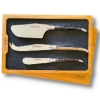
Individuals or in sets x3
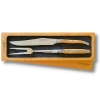
Various handle materials
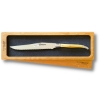
Various handle materials
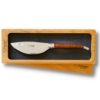
Various handle materials
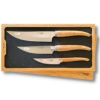
Individuals or in sets x3
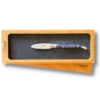
Recycled seashell handles
Various handle materials
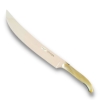
Various handle materials