Laguiole Knives
› Free laser engraving
All Laguiole pocket knives
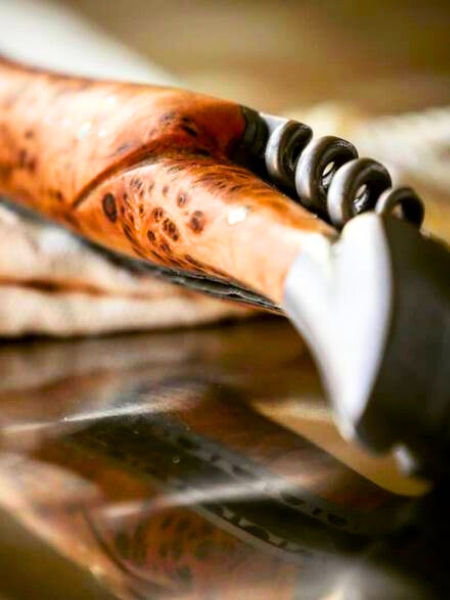
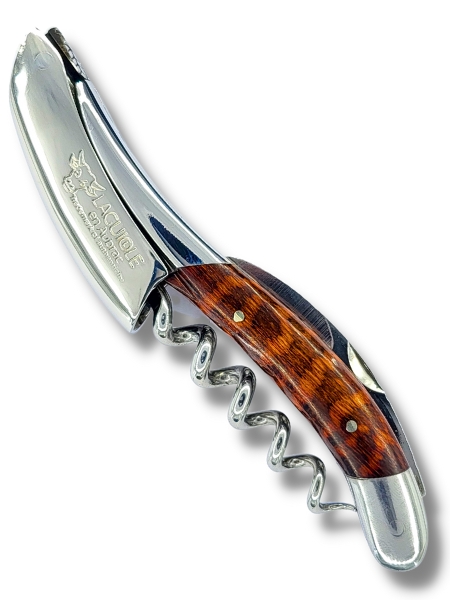
Laguiole knives with corkscrew
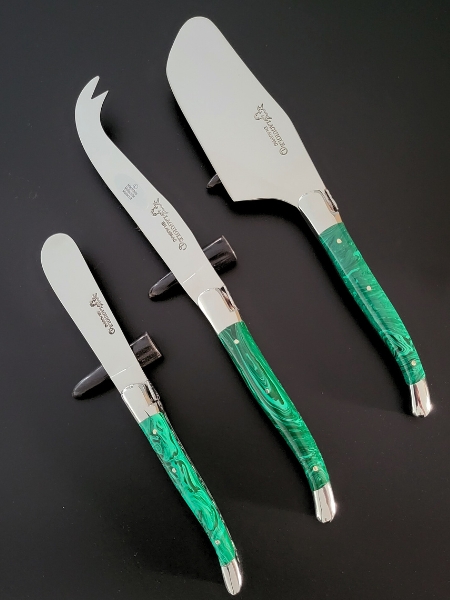
There is a distinctive hush when a cheese board arrives: light catching polished steel, a rind yielding cleanly, conversation pausing for that first precise cut. With genuine Laguiole cheese knives, handcrafted in France by Laguiole en Aubrac, the moment is calm, elegant and quietly theatrical.
This UK-first guide helps you build a board that looks curated and serves beautifully, whether you prefer British farmhouse classics or a Franco-British mix. We explain how single cheese knives and 3-piece cheese knife sets behave on real textures, why a soft-cheese knife with forked tip is the natural pick for Brie and goat’s cheese, and when a slightly thicker slicer/cleaver earns its keep on Cheddar, Comté or Gruyère.
We also show how a wooden presentation box elevates storage, service and gifting, keeping blades protected and the ritual effortless.
Beyond the heritage story, this page focuses on results you can see on the plate: fewer ragged edges, slices that hold shape, portions that lift neatly without juggling extra forks.
You’ll find tips on choosing handle materials that match your ceramics and linens, what to inspect before purchase for authenticity and finish, and simple care routines that preserve lustre without fuss. The aim is simple: a board that reads as quiet luxury weekday supper or after-dinner with friends—delivered by tools that feel as good in the hand as they look on the table.
← Back to the main guide to Laguiole kitchen knives & sets
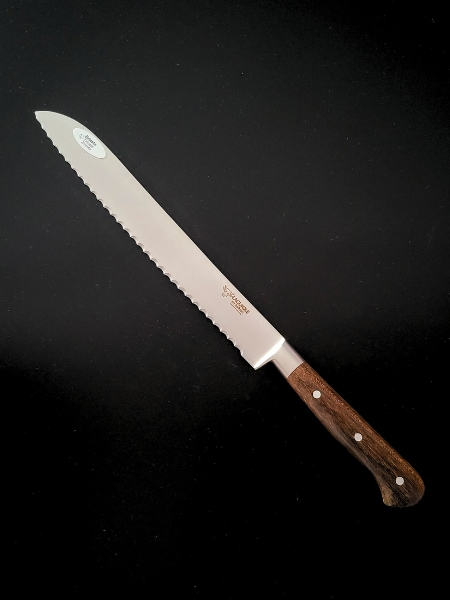
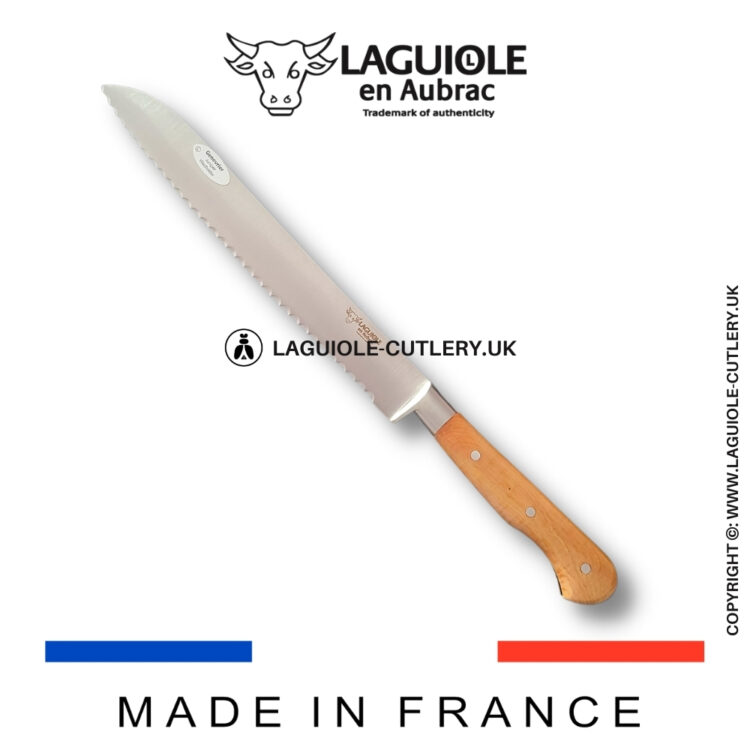
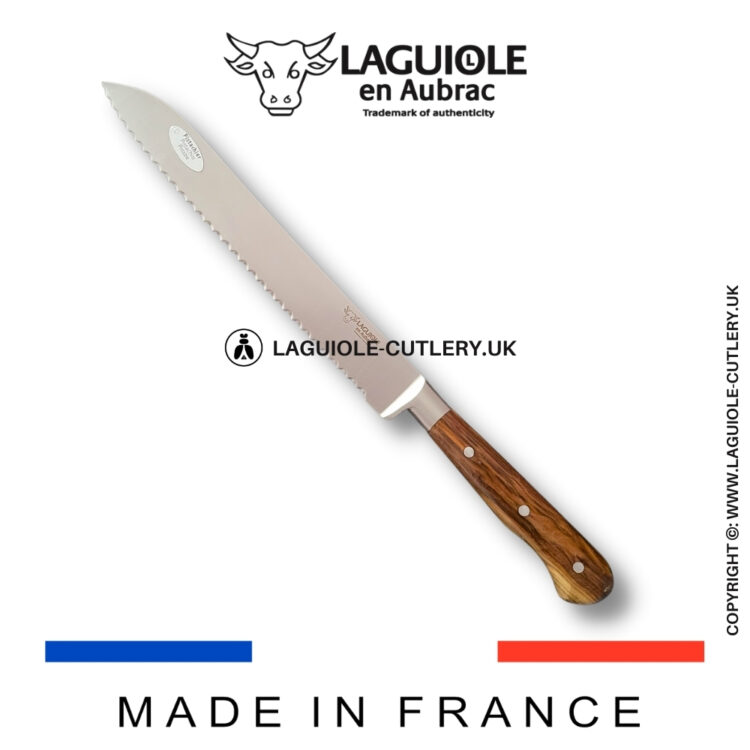
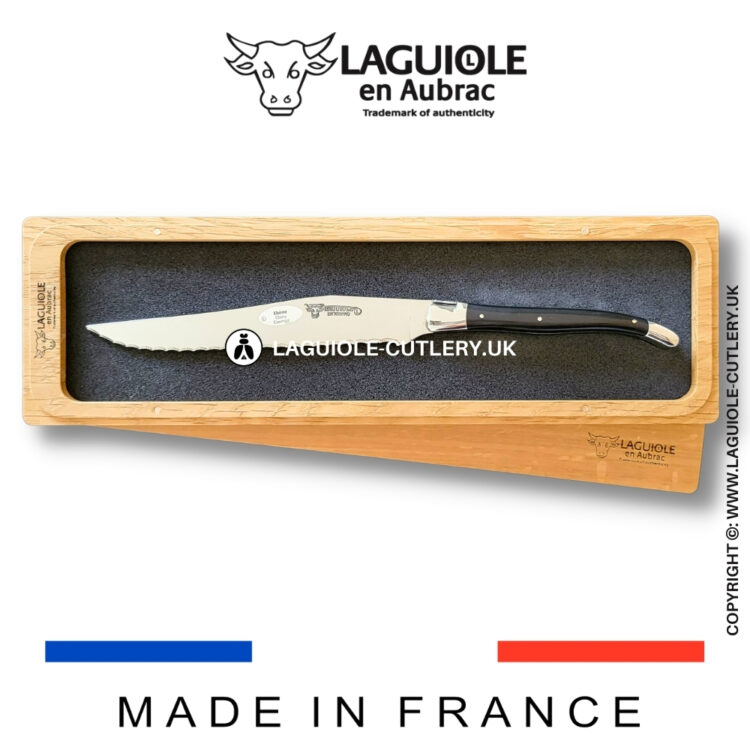
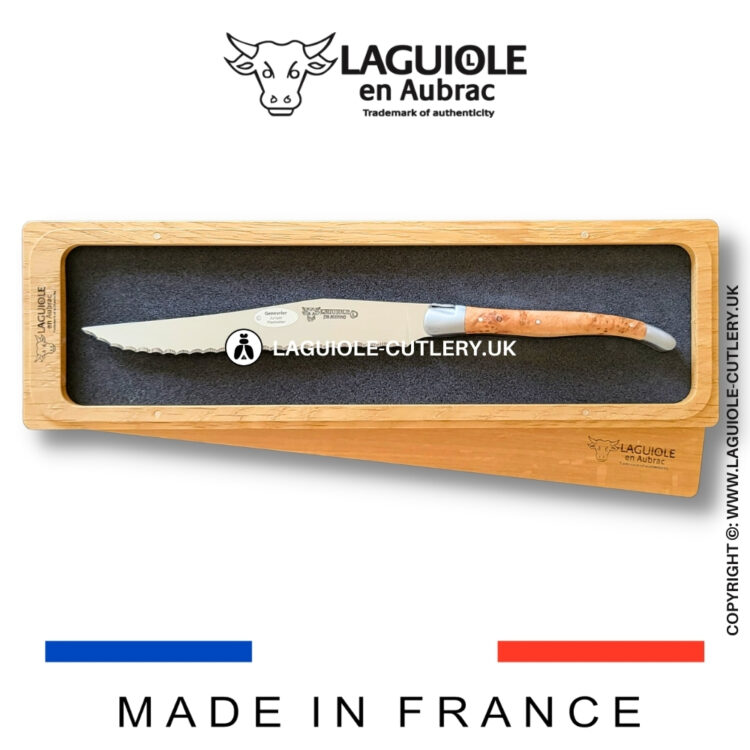
The definitive bread service tool: precision-serrated Laguiole bread knives — Classic double-bolster & Kitchen Collection — handcrafted in France by Laguiole en Aubrac.
Ready to browse the range? Visit the collection: → Shop Laguiole Bread Knives
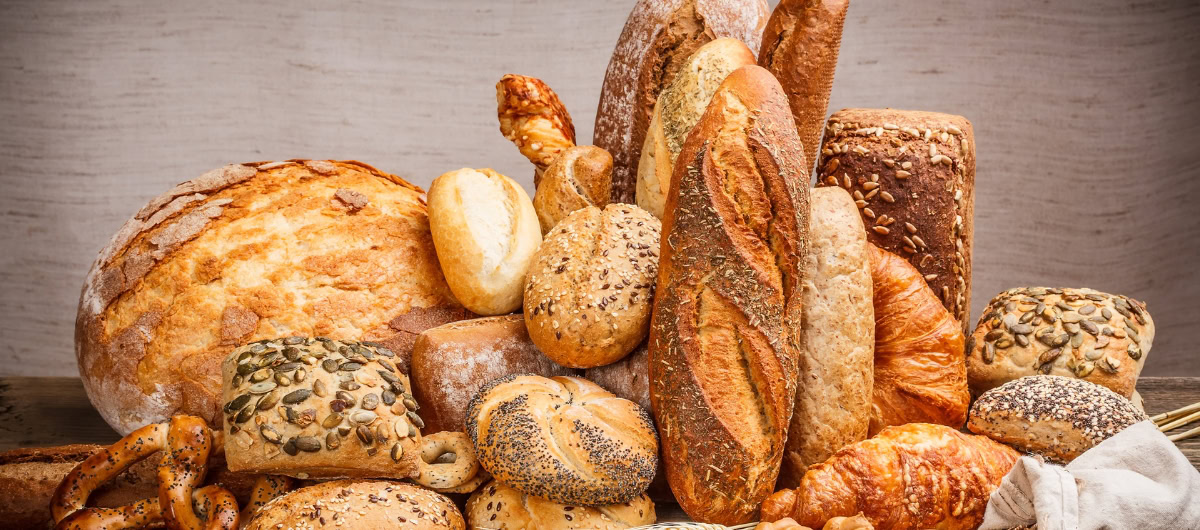
All Laguiole bread knives are serrated, but not all serrations behave the same way. Laguiole’s profile is engineered to grip and guide: fine, accurately ground teeth initiate the cut through crust with a light touch, then ride the surface with a low-effort sawing motion. The aim is integrity—crumb that stays aerated, pores that remain open, slices that lie flat without woolly edges. On very crusty sourdough, define a shallow track with two or three gentle strokes; once the blade is seated, lengthen your motion and let the teeth do the work. You should feel the knife track straight rather than skate or snag, and you should not need to lean on the loaf.
Different bakes reveal the geometry: baguette benefits from a long, even stroke that preserves the fragile shell; pain de mie and brioche prefer a delicate first “kiss” to avoid compression; dense rye and seeded loaves need consistent guidance so seeds don’t pull the cut off line. Blade finish also matters—well-polished faces wipe clean quickly between passes—while a smooth spine keeps the guiding hand comfortable over a whole boule. Combined with neutral balance at the pinch point, these details translate into predictable results: fewer crumbs on the board, cleaner toast, tidier sandwiches and slices that plate elegantly beside soup or cheese.


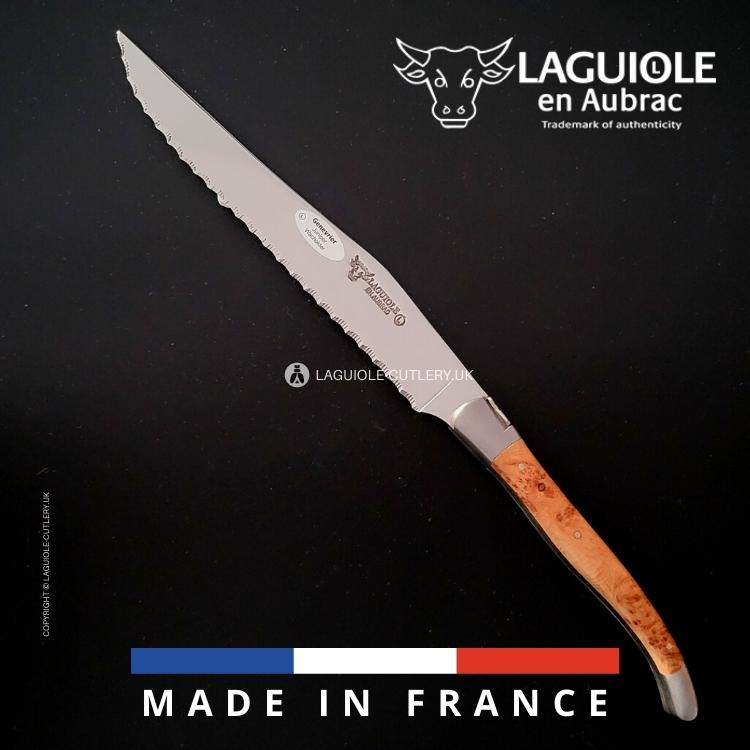
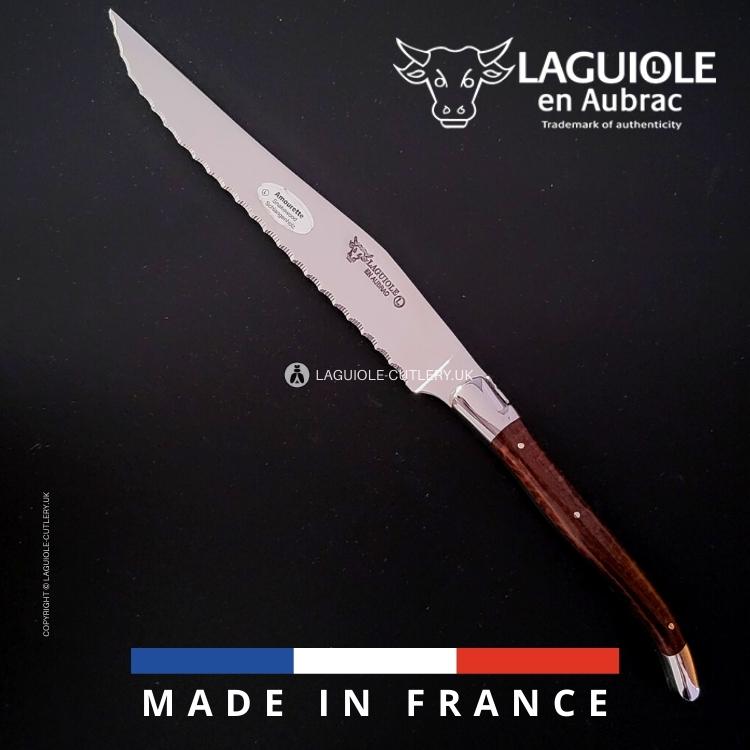
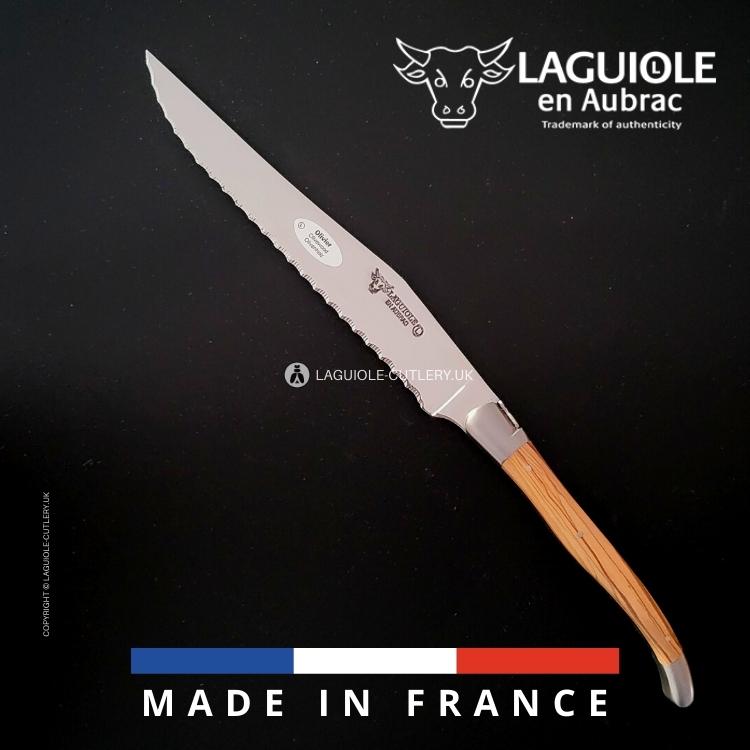
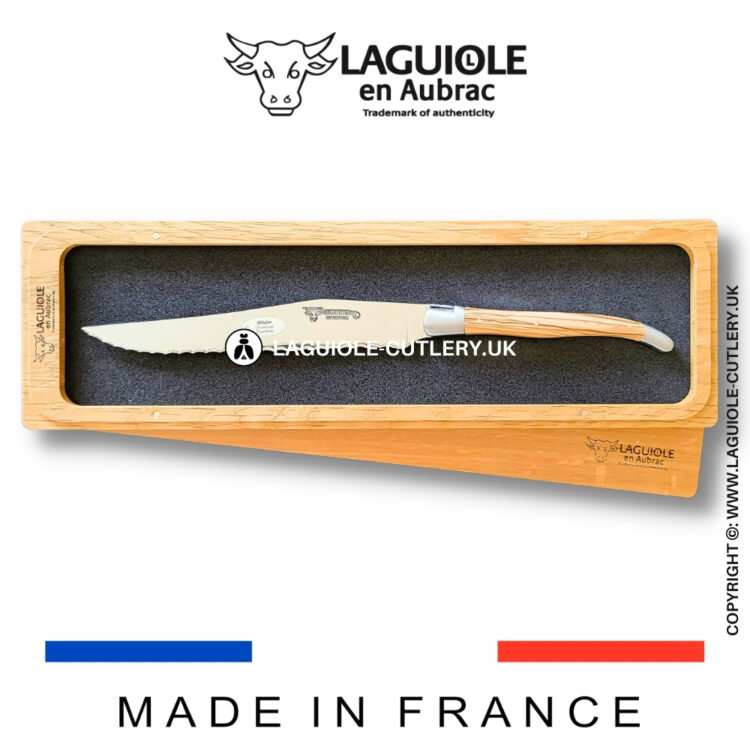
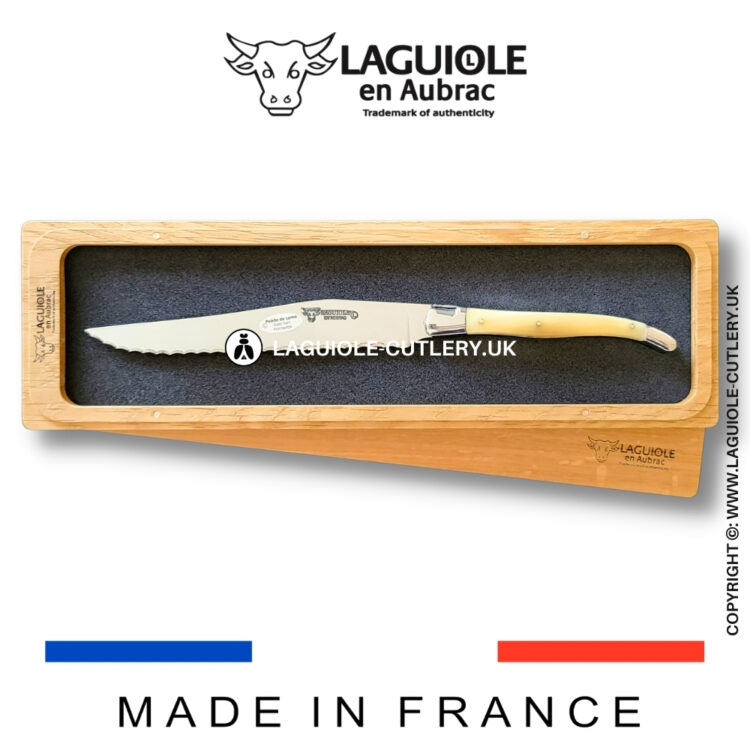
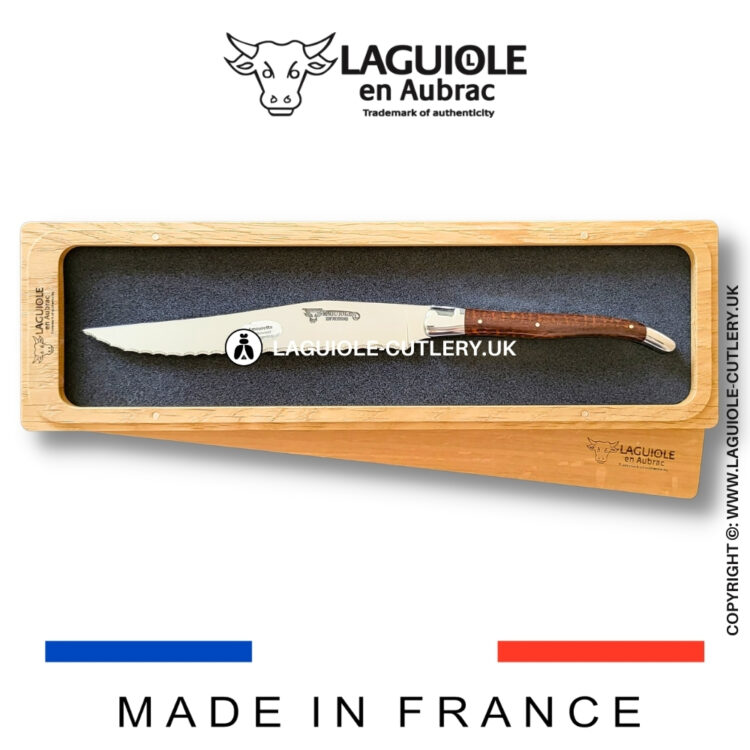
Classic (double bolsters). This is the icon most people picture when they hear “Laguiole”: two polished bolsters in stainless steel, the signature silhouette and a gently arched handle that sits naturally in the hand. Functionally, the end-weight of the rear bolster adds momentum, helping the blade glide through baguette, rustic sourdough and country loaves with one composed stroke. Aesthetically, Classic shines at the table—bread baskets beside soup tureens, a slice or two offered with cheese, candlelight catching the bolster polish. It typically pairs with a wooden presentation box, reinforcing the formal, heirloom mood and keeping the edge protected between services.
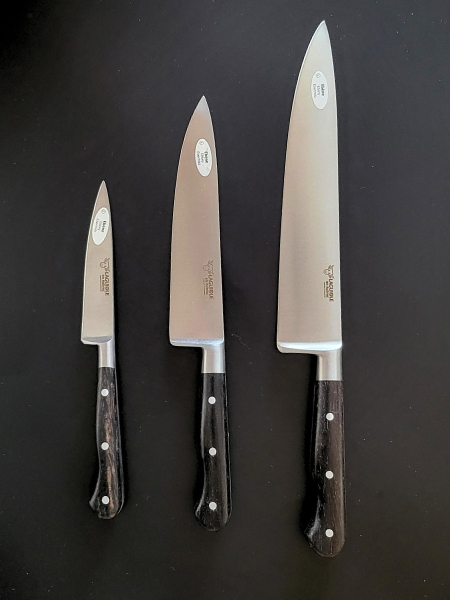
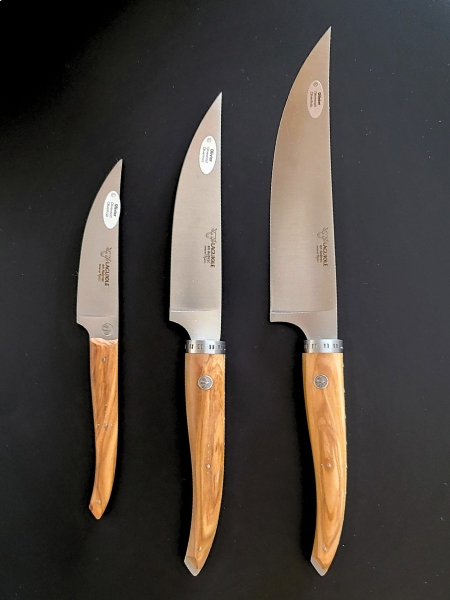
Kitchen Collection. This line matches Laguiole’s chef’s, Santoku, utility and paring knives—a cohesive design language for cooks who live at the counter. You get the same fully serrated edge and balanced handling, but in a cleaner, work-forward aesthetic that feels at home near your chopping block. It excels at batch slicing (sandwich prep, toast for a crowd) and moves neatly to the table when you prefer the understated look of professional tools. Storage is typically a smart cardboard box: practical, protective and easy to file with other everyday kit. If you value ceremony and sparkle at the table, choose Classic; if you value continuity with your prep knives and calm efficiency day to day, choose Kitchen.
Kitchen Collection (everyday calm). Materials often include Walnut (mellow brown that pairs with oak boards), Pistachio (fresh, elegant green), Olivewood (golden warmth, lively grain), Ebony (deep contrast beside stainless and glass) and Juniper (dotted figure with a discreet aromatic note). The look is contemporary and cohesive—great for counters and open shelves. Storage is typically a tidy cardboard box that protects the serrations without demanding drawer space, ideal if you keep knives close to the board for quick breakfasts and sandwich runs.
Classic (double-bolster, table-smart). Think Ebony (crisp against white china), Snakewood (collector-grade figure), Juniper (subtle movement), Olivewood (convivial, golden grain) and Zebu Horn Tip (silky, naturally one-of-a-kind). The wooden presentation box underlines ceremony: it shields the edge from knocks, keeps handles pristine and turns set-up into a single, elegant gesture—open, lift, slice. Whatever the palette, insist on flush rivets, smooth transitions where steel meets handle and an even bolster polish. High polishes wipe clean fast for service; softer sheens are forgiving during longer meals. Choose one material for gallery-calm unity, or mix woods across categories for a collected-over-time story that still reads premium.
A bread knife must combine reach and control. Reach allows long, even strokes so the blade, not your wrist, does the work; control keeps the trajectory straight and slice thickness consistent. You’ll feel a well-balanced Laguiole immediately at the pinch point: the blade leads the cut, the handle steadies the arc and your grip stays relaxed even across a full boule. On brioche and panettone, let the serrations kiss the surface to avoid compressing the crumb; on baguette, use the full length so each slice forms in a single, continuous motion. For ciabatta and bâtard, a gentle first pass prevents the crust from shattering before the cut has depth.
Ergonomics also means what happens after the cut. Classic’s rear bolster adds reassuring end-weight when you return the knife to the board; Kitchen’s cleaner spine makes repetitive slicing comfortable with fewer hotspots. Both profiles should feel poised at the heel, with a spine that’s smooth to the touch if your guiding hand rides the back during longer sessions. If your service moves between kitchen and dining room, a presentation box keeps the edge protected in transit and stores upright on a dresser or discreetly in a cupboard—always ready, always safe, and out of harm’s way when drawers get busy.
Before you buy, check three essentials: provenance, finishing and consistency. Choose Laguiole en Aubrac with explicit workshop origin; avoid vague mentions “Laguiole-style”. For finishing, run a fingertip (prudently) along the spine—no burrs; examine the bolsters for even polish; confirm that handle scales sit flush to the steel with clean junctions. Look down the line of teeth: serrations should be uniform in height and pitch along the full length, biting lightly without snagging. Balance at the pinch point must feel neutral, not blade-heavy nor handle-light, so long strokes stay straight without extra pressure.
Consistency is about the story your table tells: aligned rivets, harmonious colour and figure if you buy more than one knife, and storage that truly suits your routine. For UK practicality, favour retailers who price in GBP, share clear delivery timelines and provide responsive after-sales support in English. If you plan gifts or entertain often, prioritise a wooden presentation box (Classic) or a smart protective carton (Kitchen) so the edge stays keen and service remains effortless. Buy patiently, buy once—and enjoy cleaner slices, calmer timing and fewer crumbs where they don’t belong.
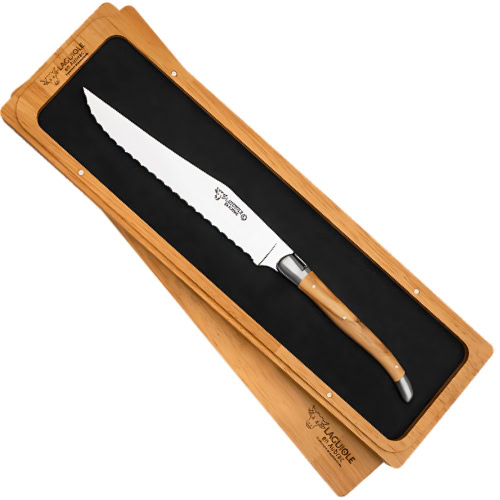
A Laguiole bread knife is more than a serrated blade: it sets the rhythm of breakfast and the polish of dinner alike. Choose Classic when you want ceremony at the table—double bolsters, a wooden box and that quiet sparkle under candlelight. Choose the Kitchen Collection when you want a cohesive, counter-friendly tool that matches your prep knives and moves neatly to service without changing tempo. Either way, insist on authentic Laguiole en Aubrac craft, check fit and finish with care (flush rivets, smooth spines, even serrations) and keep maintenance simple: handwash, dry promptly and protect the edge between uses. Do this and you’ll see the same result every time—long, confident strokes, slices that hold shape, and a board that looks composed rather than chaotic.
Yes. Both use precision serrations designed to grip crust, protect crumb integrity and deliver low-effort, straight tracking.
Classic—double stainless-steel bolsters, polished accents and typically a wooden presentation box for a refined table setting.
Kitchen Collection—a clean, work-forward aesthetic that matches chef’s and utility knives, with protective carton storage.
Ebony or horn tip for formal contrast; olivewood or walnut for warmth; juniper for subtle movement; pistachio for a fresh, contemporary note.
Handwash and dry promptly; avoid soaking and dishwashers. Occasionally nourish wood handles with a light food-safe oil; store in a box or with a guard to protect the serrations.

• Crafted in France, in the historic area of origin.
• Engraving and dispatch completed on the day of ordering.
• Deliveries to France, the European Union, and worldwide.
• Delivery within 48 hours in the UK. 4 days to the USA with DHL Express.
• Supplied with: certificate of authenticity, 14-page manual of genuine Laguiole knives, protective case.
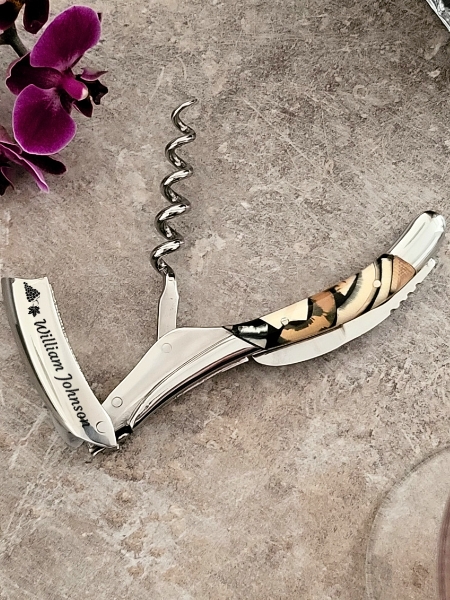
COMPLIMENTARY LASER ENGRAVING
Laser engraving on the blade is an innovative technique that merges art and technology to elevate and customize a knife. Select from 6 fonts and 12 symbols.
Laguiole POCKET KNIVES
Explore our range of Laguiole en Aubrac folding knives, a hallmark of French artisanal cutlery. These premium pocket knives, blending elegance and functionality, embody the essence of traditional craftsmanship and unparalleled expertise in knife making.
All Laguiole Folding Knives
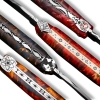
When Craftsmanship Becomes Art
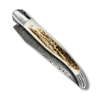
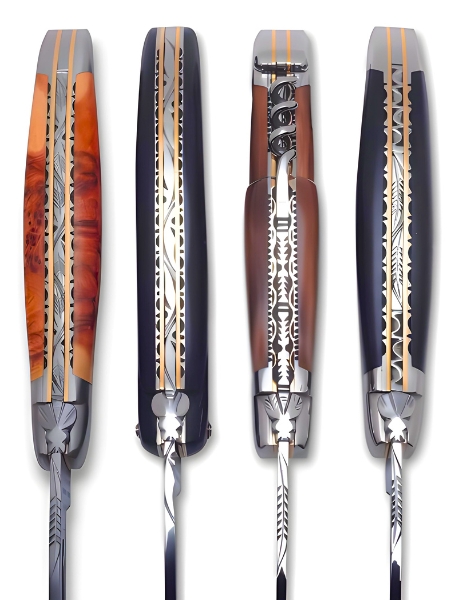
Laguiole Damascus steel blades captivate with hypnotic wave patterns
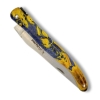
Explore the pinnacle of Laguiole artistry with our Limited & Unique Editions
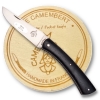
French Gastronomy Meets Fine Cutlery.
LAGUIOLE CORKSCREWS
Explore our collection of Laguiole en Aubrac sommelier corkscrews, indispensable tools for wine enthusiasts and oenology experts. Each corkscrew is meticulously crafted to the exacting standards of the renowned Laguiole en Aubrac knives.
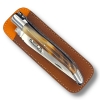
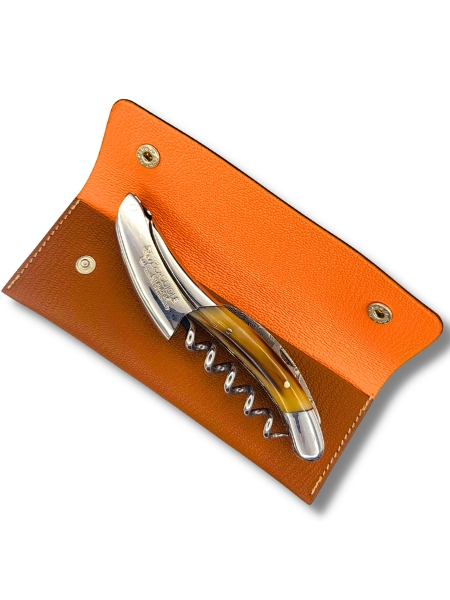
Sheaths, Box & Belt Pouches
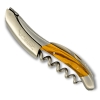
Marquetry - Wood - Horn or Bone
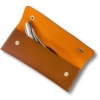
Leather Sheaths
COMPLIMENTARY LASER ENGRAVING
Opting for a personalised Laguiole en Aubrac sommelier corkscrew means injecting a dash of originality into an object already renowned for its quality and aesthetics!

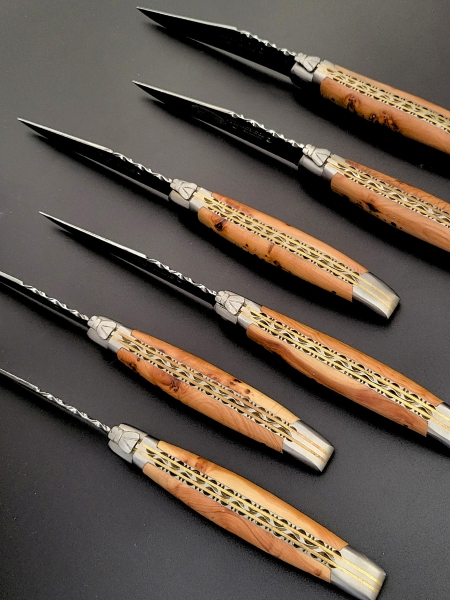
LAGUIOLE CUTLERY SETS
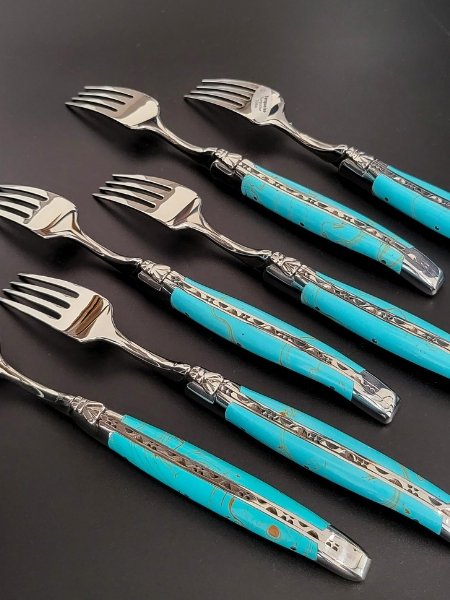
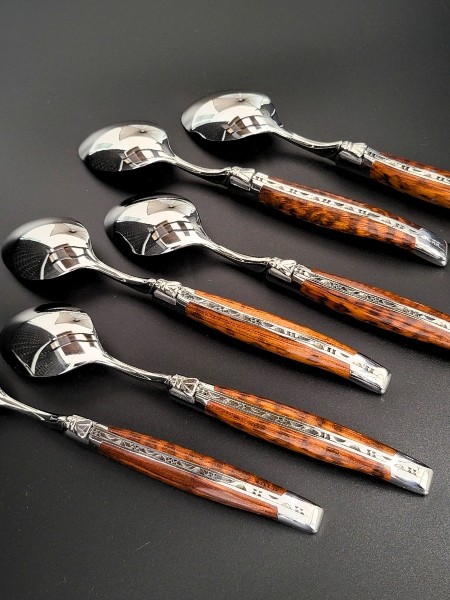
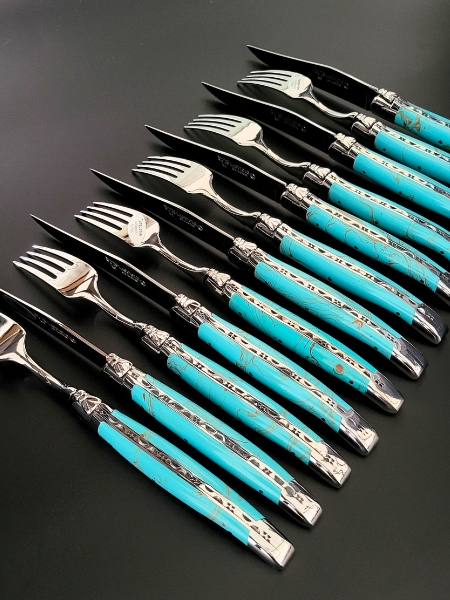
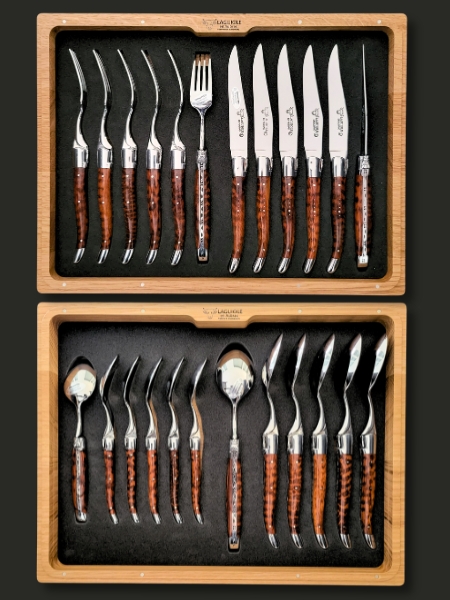
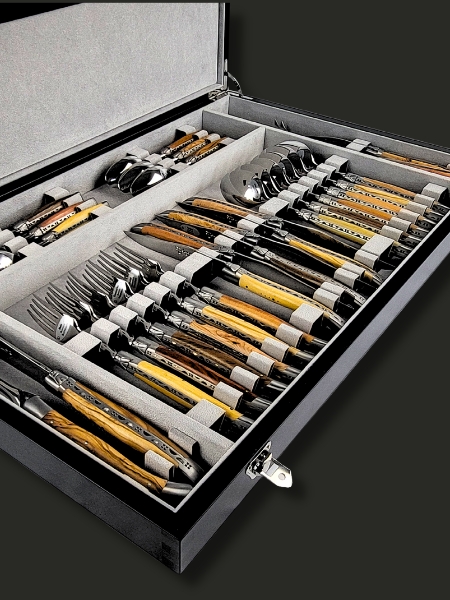
Explore our curated selection of Laguiole en Aubrac cutlery sets, ranging from classic to contemporary styles, featuring an array of vibrant and unique handle materials. Available in sets of 2, 4, or 6, with optional forks, as well as soup and dessert spoons.
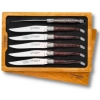
Various handle materials
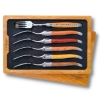
Various handle materials
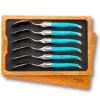
Various handle materials
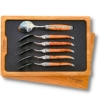
Various handle materials
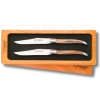
Various handle materials
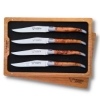
Various handle materials
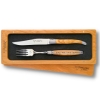
Various handle materials
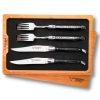
Various handle materials
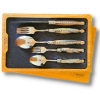
Various handle materials
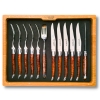
Various handle materials
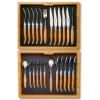
Various handle materials
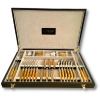
Various handle materials
Additional Knives and Sets
Explore our supplementary cutlery range, crafted to elevate your dining experience and provide you with an unmatched culinary journey. This sophisticated and stylish collection encompasses cheese knives, oyster knives, carving sets, and a myriad of other indispensable accessories for a meticulously arranged table.
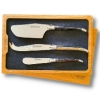
Individuals or in sets x3
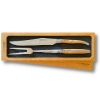
Various handle materials
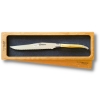
Various handle materials
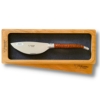
Various handle materials
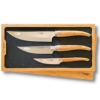
Individuals or in sets x3
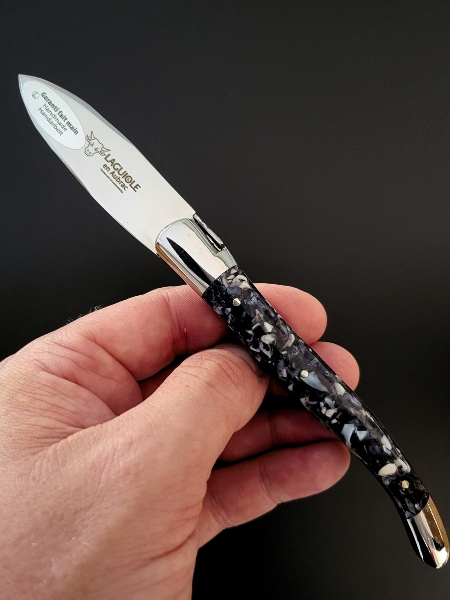
Recycled seashell handles
Various handle materials
Various handle materials