Laguiole Pocket Knives with Corkscrew
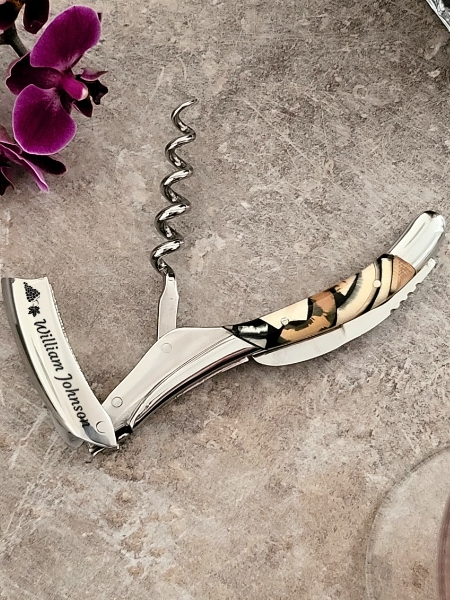
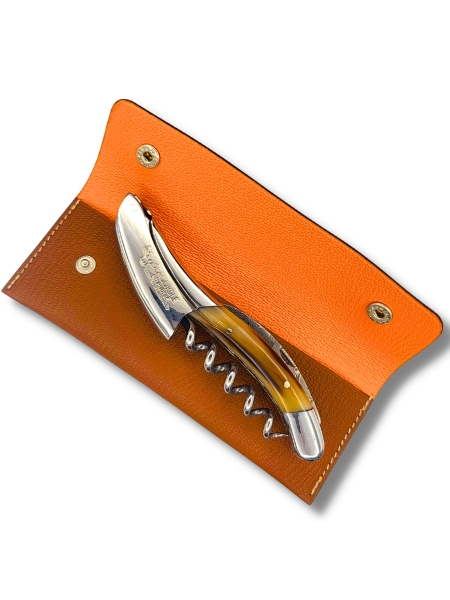
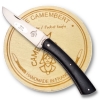
These Laguiole pocket knives with corkscrew are each made by hand in France by Laguiole en Aubrac, with a blade and a corkscrew sharing one handle. Picture lunch on the lawn at home: a hamper on a tartan rug, a wedge of Cheddar, a pork pie, a crusty loaf, and a bottle of claret with its cork still in. A corkscrew knife deals with all of it, so nobody has to dash back to the kitchen drawer halfway through.
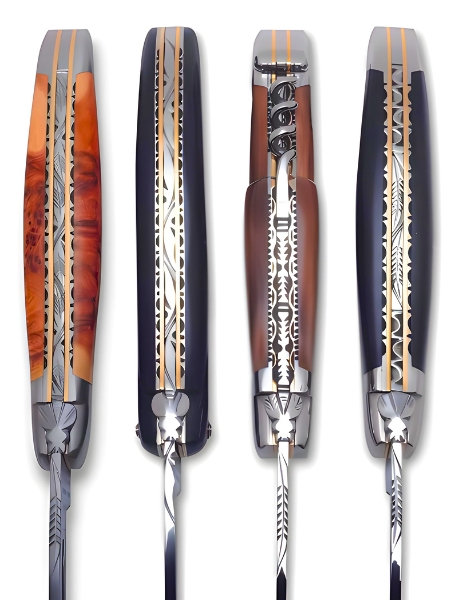
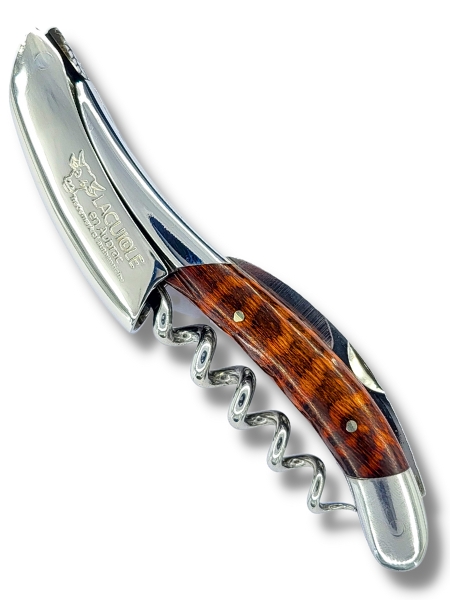
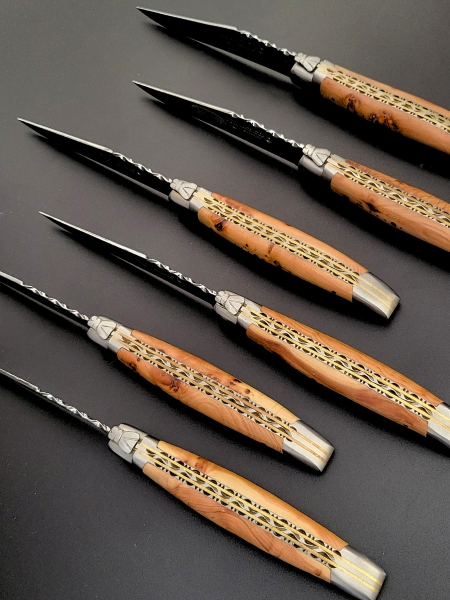
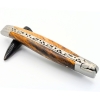
Start with the handle: knotty juniper with its peppery scent, snakewood with its snakeskin spots, or glossy black ebony. Then choose between the classic model, with its slender Laguiole curve, and the double-plate version, whose handle is framed by plates chiselled by hand. Either way, you get a Laguiole knife with corkscrew that cuts the bread and draws the cork, all from one handle. Need help choosing? Read How to Choose a Laguiole Corkscrew Pocket Knife.
•Made by hand in France by Laguiole en Aubrac•A corkscrew that folds beside the blade•Satin or polished, depending on the handle•
A picnic knife for lunch in the garden
A good picnic knife has to cut bread, cheese and fruit, and this one opens the wine as well. Its corkscrew harks back to around 1880, when men from the region the Laguiole comes from went to Paris to work as café waiters. These two-piece knives are made today by Laguiole en Aubrac, by hand in France. Set a ploughman's out on the garden table: slice the loaf, cut the Wensleydale and quarter a pear, then fold out the corkscrew for a bottle of red. When the plates are cleared, close it and tuck it back in the hamper.
Video · 0:45
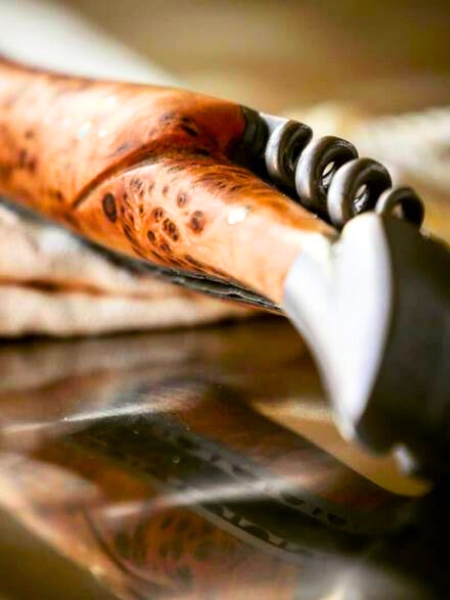
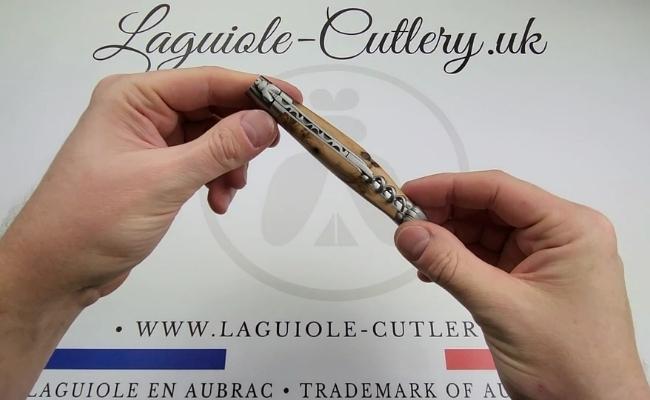
Watch the juniper wood corkscrew knife
See the dark knots and veins of the juniper handle up close.
View this corkscrew knife
Juniper, snakewood or ebony: choosing a wooden handle pocket knife
A wooden handle pocket knife feels warm in the hand, and these three woods could hardly look more different. Juniper comes from the shrub whose berries give gin its flavour, and the wood holds on to a peppery scent alongside its dark knots and swirling veins. Snakewood is the showpiece, mottled like a snake's skin and polished until it gleams. Ebony is the understated choice, deep black and glossy, and it looks particularly smart against a white tablecloth. Juniper is finished satin, soft and matt under the fingers, which sets it apart from the two polished woods.
Classic or double plates: picking your Laguiole corkscrew knife
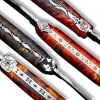
The classic Laguiole corkscrew knife keeps the clean, curving lines everyone recognises, and it suits anyone after a quieter look. Double plates are Laguiole en Aubrac's most elaborate construction: a broader handle, framed by plates hand-chiselled with a file, and that detail is what draws the eye. Each style opens a bottle and cuts a slice of pie, so pick whichever pleases your eye. If the second style appeals, read How to Choose a Double-Plates Laguiole Pocket Knife.
Your corkscrew knife questions
What is the knife on a corkscrew called?
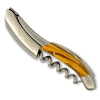
On the folding corkscrew waiters use at the table, the little blade that folds out beside the corkscrew is called a foil cutter, and its only job is to trim the capsule round the neck of the bottle. It works the other way round on any pocket knife with corkscrew: the main tool is a proper blade for bread, cheese and fruit, with the corkscrew folded in alongside it. On a Laguiole, both share one handle, made by hand in France by Laguiole en Aubrac.
Who invented the corkscrew?
The first corkscrew patent was granted in 1795 to the Reverend Samuel Henshall, an English clergyman, and his design added a small disc that stopped the worm going too far into the cork. Corkscrews were already in use before then, but Henshall's patent is the one usually cited as the starting point. On a Laguiole, the corkscrew shares its handle with a blade, so one knife opens the bottle at your table and slices the cheese to go with it.
What is juniper wood good for?
Juniper is a dense, fragrant wood, used for small objects such as spoons, bowls and knife handles. Its grain is full of dark knots and wandering veins, and it keeps a peppery smell you'll notice whenever you pick the knife up. On these corkscrew knives it's finished satin, which suits its knotty figure. Wash it by hand, dry it carefully straight afterwards, and the wood keeps its good looks.
Each delivery includes care notes. Give the knife a gentle hand wash, dry it at once with a cloth, and keep the dishwasher well away from it.

 Black Leather Sheath
18€
 Laguiole Leather Belt Sheath - Brown
49€
 Laguiole Leather Belt Sheath - Brown
 Horizontal Brown Leather Belt Sheath - Le Millésime
 Black Horizontal Leather Sheath
 Horizontal Black Leather Belt Sheath - Le Millésime
 Brown Curved Synthetic Sheath for Laguiole Corkscrew and Pocket Knife
 Black Synthetic Sheath for Laguiole Knives
 Black Leather Sheath for Corkscrews
 Brown Horizontal Leather Sheath