 Handcrafted in Aveyron, the historic home of the Laguiole knife

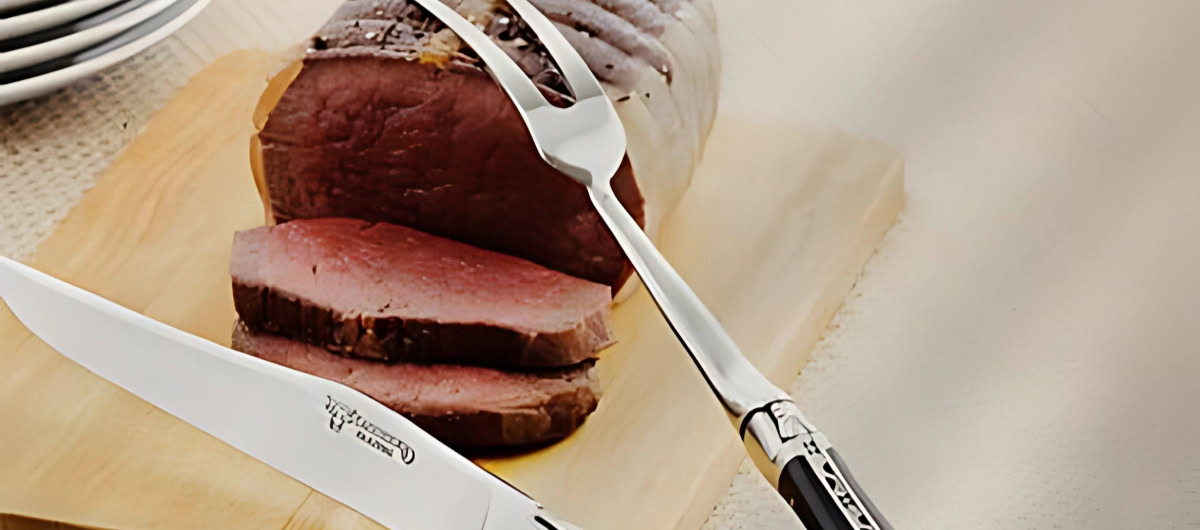
Introduction: theatre, timing, and calm control at the roast
There is a quiet hush before the first slice of a British Sunday roast. A genuine Laguiole carving knife & fork set, handmade in France, turns that moment into purposeful theatre: long, confident strokes; clean, glistening slices; and a pace that feels composed rather than improvised. This premium UK guide helps you choose with certainty—what the knife and fork each contribute, how blade geometry changes texture and presentation, and why a quality presentation box (coffret) elevates storage, service, and gifting. Beyond the artisan story, we focus on real dining: rib roasts, rolled turkey crowns, lamb legs, and pork loins served to guests who notice precision on the platter as much as flavour on the plate. You will also find practical, easy-to-follow care advice designed for natural handles and modern kitchens. The aim is simple: select a carving set that looks impeccable on the sideboard, feels naturally balanced in hand, and performs flawlessly from the first cut to the final helping—quiet luxury you will use often, not just admire.
The Best Features
← Back to the main guide to Laguiole dining cutlery sets
The definitive entertaining set: a 2-Piece Laguiole carving Set handcrafted in France by Laguiole en Aubrac.
Ready to browse the range? Visit the collection: → Shop Laguiole Carving Knife & Fork Sets
Choosing for your roasts & your table: length, materials, and coffret
Match your carving set to the joints you serve most often. For typical UK roasts—sirloin, pork loin, rolled turkey crown—a blade around 20–23 cm offers the ideal sweep for smooth, uninterrupted cuts; if you regularly present large rib roasts or whole legs of lamb, consider extra length to extend each stroke. Handle material sets mood and maintenance: Olivewood brings golden warmth and expressive grain that pairs with stoneware and natural linens; Ebony delivers graphic contrast that photographs crisply against white porcelain and crystal; Juniper adds dotted grain and a subtle connoisseur’s charm; Snakewood reads dramatic and collectible under candlelight; Horn Tip offers organic depth with unique marbling. Whichever you choose, insist on smooth transitions where steel meets handle, flush rivets, and consistent polishing at the bolster. Finally, consider the role of a presentation box: beyond elegance, a well-made coffret protects edges, aligns tines, streamlines service from kitchen to table, and turns a practical tool into a gift-worthy heirloom.
In Stock!

Out of stock
✖ Back in stock soon

Out of stock
✖ Back in stock soon
In Stock!

Out of stock
✖ Back in stock soon
In Stock!

Out of stock
✖ Back in stock soon
In Stock!

✔ In stock. Delivery by Monday 9 November
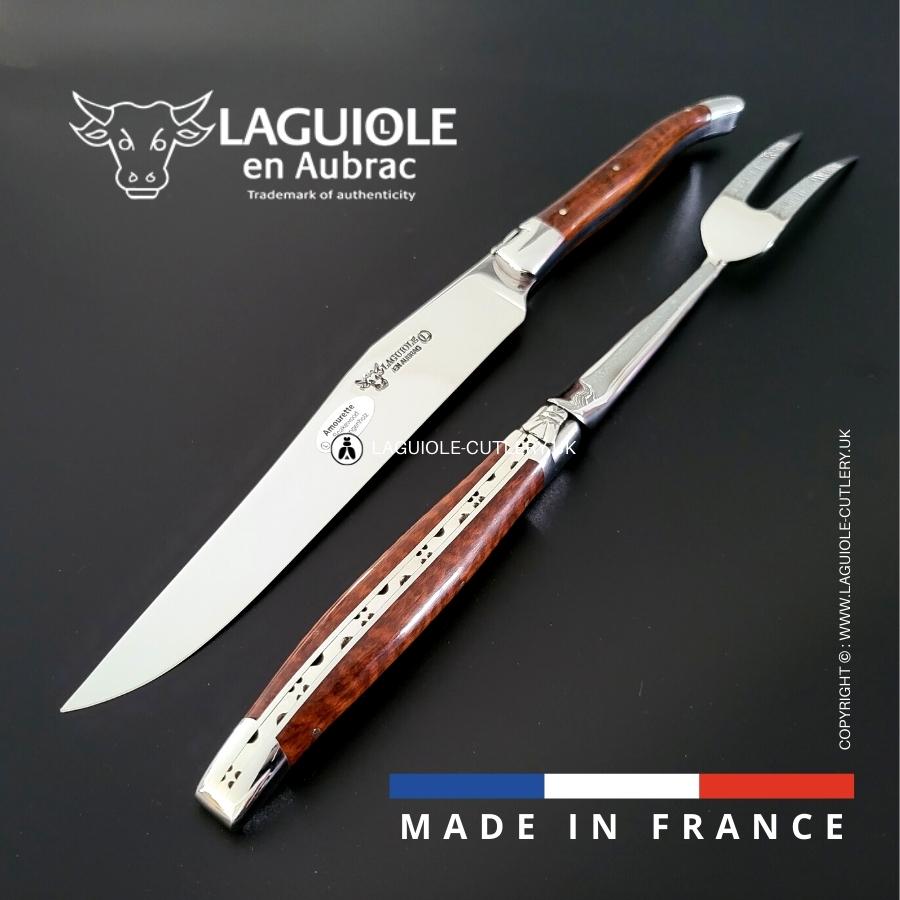
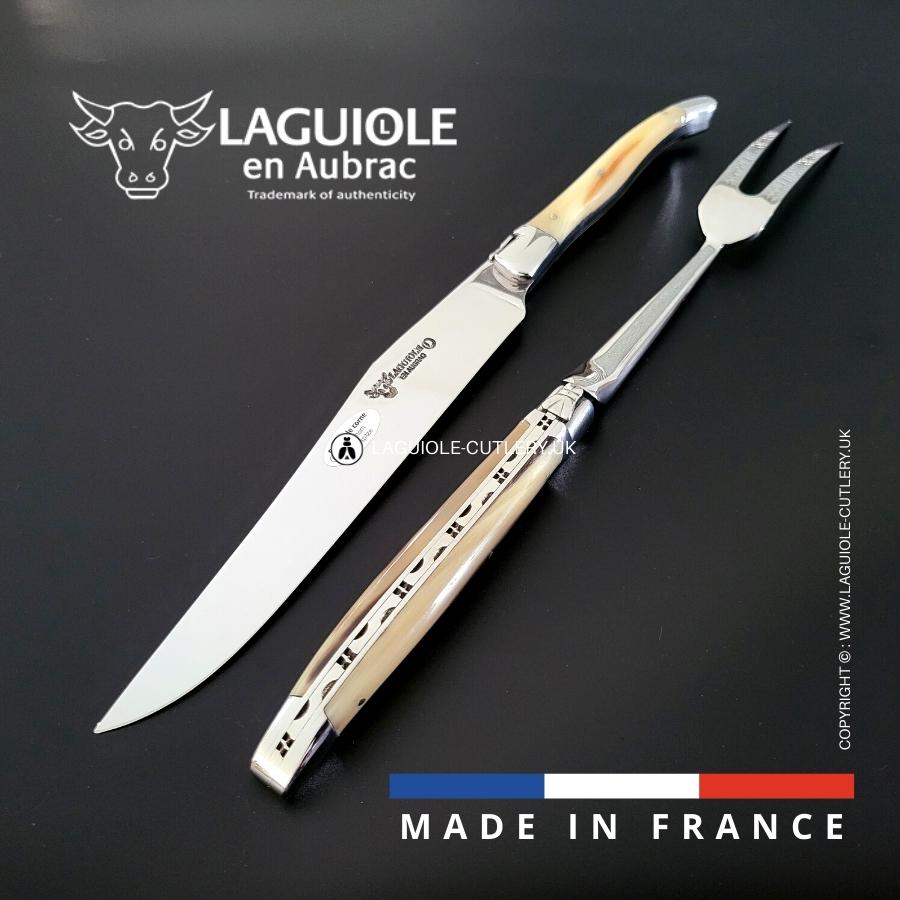
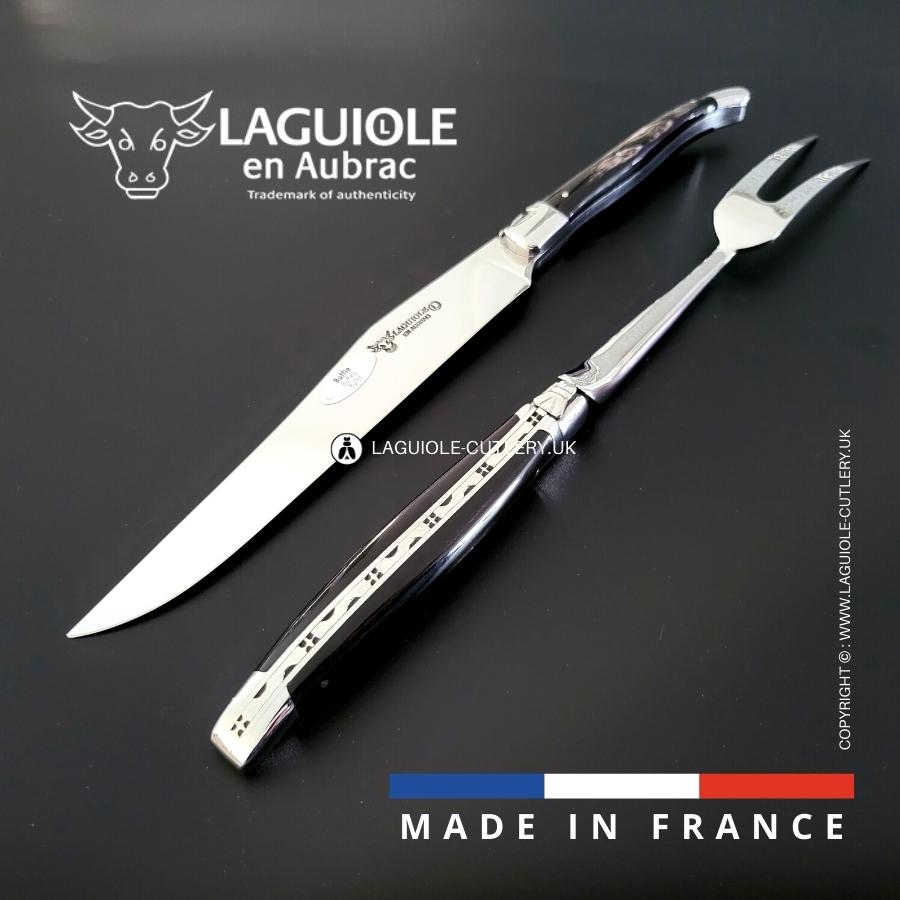
Comparing Laguiole Carving Sets variants: profiles, finishing, and the difference you feel
Not all carving sets feel the same, even within one heritage pattern. Knife profiles range from extra-slender—perfect for gliding through delicate laminations and poultry breast—to slightly broader, which steady the hand through hearty joints and generous bark. Edge finish matters: a finely polished edge slices quietly and leaves glossy faces that plate beautifully under gravy; coarse micro-serrations can tear fibres and shed moisture onto the board. Fork geometry is equally important: long, true tines give confident control without crushing crusts. Finishing sets the visual tone—mirror-polished bolsters catch candlelight for formal evenings, while a subtler sheen reads contemporary and forgives fingerprints in daily service. Across natural handles, seek colour and figure harmony between knife and fork and check alignment where the bee and spring meet the steel. The right combination produces poise: the set settles in the hand, strokes lengthen and smooth out, and the platter reads as it should—orderly, even slices that hold shape and shine.
Inspection & purchase: what UK buyers should check
Before you commit, inspect three essentials: provenance, finishing, consistency. First, provenance—choose Laguiole en Aubrac with clear workshop origin and authenticity documentation; avoid vague “Laguiole-style” claims. Next, finishing—run a finger (carefully) along spine and edge to feel for burrs; examine the bolster for even polish; confirm that the iconic bee and spring are crisp, not muddied. On the fork, ensure tines are straight, parallel, and firmly set. Finally, consistency—the pair should mirror each other: aligned rivets, identical silhouette, balanced weight at the pinch point, and compatible handle tone and figure. For UK practicality, favour retailers who price in GBP, communicate delivery transparently, and provide responsive after-sales support in English. If you plan a cohesive table over time, confirm the availability of your chosen handle material across complementary pieces so your design language remains consistent from prep to pudding. Buy patiently, buy once—and enjoy it for decades.
Care & everyday use: habits that preserve beauty and performance
Natural-handle craft rewards simple routines. Handwash blade and fork in warm, mildly soapy water and dry immediately with a soft cloth; avoid soaking and dishwashers, which can stress wood and horn and dull polished bolsters. In hard-water areas, towel-dry to prevent spotting. Use a wooden or end-grain board to protect the edge, and let roasted meats rest before carving so juices redistribute in the joint rather than pooling on the board. Between seasons, a light food-safe oil refreshes olivewood, juniper, and snakewood; horn benefits from gentle drying and an occasional soft-cloth polish only. Store the set in a presentation box to keep edges protected and tines aligned—especially useful when carrying from kitchen to table or terrace. These habits keep the edge keener, handling safer, and the overall look quietly luxurious—exactly what guests expect from true Laguiole.

Conclusion: theatre on the table, precision on the board
A Laguiole carving knife & fork set does more than portion food—it sets the tempo of your meal and the standard of presentation. Choose the blade length that matches your roasts, a handle that suits your room’s palette, and a coffret that makes service effortless. Insist on authentic Laguiole en Aubrac workmanship and neutral, balanced handling; keep care simple and regular. The reward is immediate and lasting: quieter carving, neater platters, calmer timing with sides and gravy, and a sense of ceremony that never feels showy. When the platter returns for seconds and the slices still look tender and even, you will know the set is doing its work—precision you can taste, theatre you can share, week after week.
FAQs: Laguiole carving sets for UK homes
How long should the carving blade be for typical UK roasts?
For sirloin joints, rolled turkey crowns, and pork loins, 20–23 cm is ideal. If you often carve large rib roasts or whole legs of lamb, a longer blade helps maintain sweeping, uninterrupted strokes.
Why not just use a chef’s knife?
A chef’s knife is a kitchen workhorse, but its height and belly tend to push and tear on the board. A slender carving blade tracks straight with less drag, producing thinner, more uniform slices that hold heat and sauce better on the platter.
Is a presentation box really necessary?
Highly recommended. A quality coffret protects edges and tines, keeps natural handles away from humidity and drawer knocks, and turns service into a single, elegant gesture—lift, carve, close, carry.
Are natural handles high-maintenance?
No. Handwash, dry promptly, and apply a light food-safe oil occasionally to wood; horn appreciates gentle drying and a soft-cloth polish only. Avoid dishwashers and soaking to preserve fit and finish.
How do I verify authenticity before buying?
Look for Laguiole en Aubrac with explicit workshop origin and documentation. Inspect finishing (polish, rivets, bee detailing) and buy from UK-focused retailers who price in GBP and offer responsive after-sales support.