 Handcrafted in Aveyron, the historic home of the Laguiole knife


Some objects quietly elevate everyday life. A butter spreader that glides instead of gouging, a compact hinge blade that opens oysters without drama, a champagne sabre that turns a toast into theatre, a micro-serrated arc that keeps pizza toppings exactly where you placed them. This UK hub brings those moments together with genuine Laguiole en Aubrac, handmade in France and chosen for British tables and kitchens.
You will find how each tool feels in the hand, what to inspect before you buy (balance, finishing, presentation box), and how to match handles to interiors from olivewood warmth to horn’s organic polish. The guidance is practical and premium: clear scenarios, safety where necessary, and care that preserves lustre for years. A note on maintenance: wood handles prefer a light coat of natural beeswax (never oil) to protect the grain without leaving residues; all pieces like gentle handwashing and prompt drying.
Whether you host often or refine small rituals—breakfast trays, seafood Fridays, Sunday roasts—use the eight sections below to move from curiosity to considered choice, then dive into the dedicated guide for the full detail and buying checklist.

Kitchen Knives & Sets — Classic vs Gourmet
Calm prep begins with the right trio: detail, everyday, power. In practice that means a 10 cm paring knife, a 15 cm kitchen/utility blade and a chef’s knife—20 cm in Classic, 18 cm in Gourmet. Classic keeps the iconic Laguiole silhouette with polished bolsters and heritage cues; Gourmet softens the lines with rounded handles that melt into the palm, presented together in an elegant oak-tone box. Singles are a superb start (15 cm kitchen for veg and fruit; 20 cm chef for all-round boardwork), but most UK cooks are happiest with a boxed 3-piece set—edges last longer and timing improves because each blade does its own job. Inspect finishing: smooth bolster transitions, flush pins, respectful edge geometry and a balance that guides the cut rather than demanding force. Handles in olivewood, walnut, ebony or juniper let you echo cabinetry and worktops. Care is straightforward: gentle handwash, prompt dry, and a light coat of beeswax on wood—never oil—to seal the grain without greasiness. Build your line-up once, then cook with confidence every day.
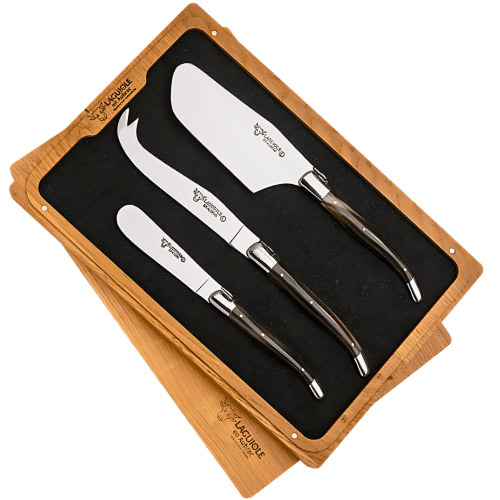
Cheese Knives & 3-Piece Sets — Serve Every Texture
A composed cheese course needs more than one profile. The classic 3-piece Laguiole set covers the board end-to-end: a spreader for butter and soft, scoopable cheeses; a fork-tipped soft-cheese knife that slices cleanly and lifts portions neatly; and a slightly thicker slicer/cleaver for semi-hard to hard cheeses such as Cheddar, Comté or Gruyère. If you always serve a favourite style, a single knife in a fitted box is an elegant, space-saving choice; for mixed boards and gifting, the full trio looks disciplined and performs beautifully. Handles define atmosphere—olivewood’s golden grain for rustic stoneware, ebony’s graphic edge for white porcelain, horn for organic tactility, and statement woods like snakewood when you want drama. Present on slate or pale boards to let the materials sing; keep service calm by assigning each profile to its texture so rinds stay neat and crumbs minimal. Care is modest: handwash, prompt dry, beeswax on wood, and safe storage in the presentation box. Your boards will plate faster, photograph better and feel effortlessly premium.
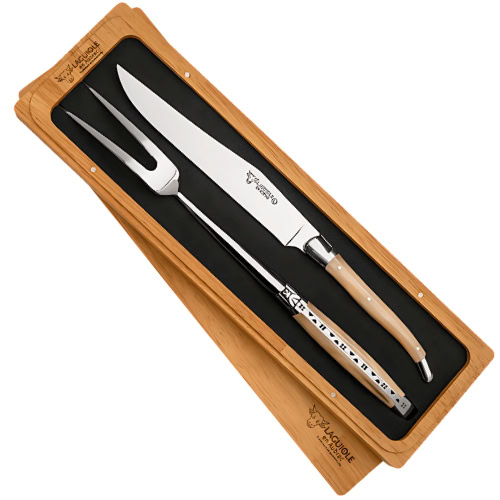
Carving Knife & Fork Sets — Theatre & Control for UK Roasts
Roast service is where poise meets performance. A Laguiole carving set pairs a long, slender blade that tracks straight through beef, lamb, pork or poultry with a rigid, aligned fork that anchors without bruising. The result is thinner, more uniform slices, calmer plating and a smoother rhythm with gravy and sides. Choose blade length to suit your routine—20–23 cm covers most joints at home—then let the handle material express the occasion: olivewood for Sunday warmth, ebony for evening formality, horn for organic elegance. A fitted presentation box earns its keep, protecting edges and tines and turning set-up into a single gesture at the table. Technique is simple: rest the joint, stabilise with the fork, and use long, confident strokes across the grain; let the blade do the work. Care matches the rest of the range—handwash, prompt dry, and a light beeswax coat for wood. On busy tables from Christmas to Easter, this is the upgrade guests notice even if they cannot name why.
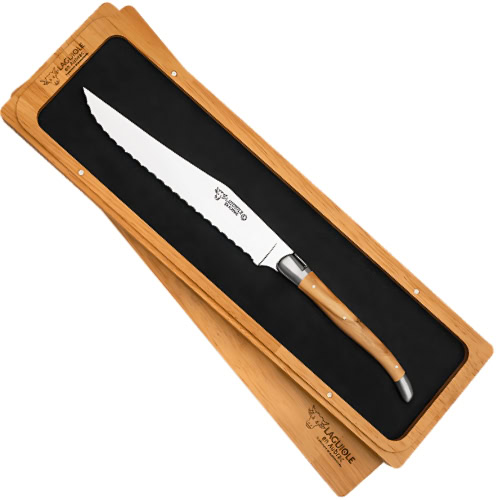
Bread Knives — Classic Double-Bolster vs Kitchen Collection
Great bread deserves flat-sided slices with pores intact. Laguiole bread knives use precision serrations that grip crust, guide the stroke and protect the crumb—so butter spreads evenly and sandwiches stack neatly. You will choose between two designs: the Classic double-bolster knife, table-smart with a little sparkle under candlelight and typically presented in a wooden box; and the Kitchen Collection version, cleaner in line for the counter, usually supplied in a tidy cardboard case. Handle materials set the tone—ebony for formal contrast, olivewood for warmth, juniper for subtle figure, snakewood for dramatic grain. Technique matters as much as steel: let the teeth kiss the crust first, then extend into relaxed, long strokes so the blade does the work; avoid heavy downward pressure that crushes airy interiors. Store safely in the box or with a guard, handwash and dry promptly, and refresh wood with beeswax rather than oil. From breakfast to cheeseboards, your loaves will taste—and look—better.
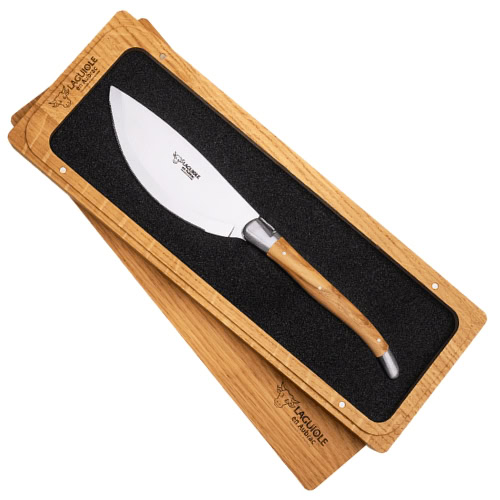
Pizza Knives — Half-Moon, Micro-Serrated Control
Wheels tend to compress before they cut; a well-made pizza knife begins clean and stays tidy. The Laguiole half-moon profile with fine micro-serrations “bites” the crust lightly, then rocks through the base with minimal downward pressure—so molten cheese and toppings remain exactly where you placed them. The classic double-bolster handle adds end-weight and a steady arc from heel to tip, whether you are dividing a Neapolitan pie, deep-dish slices or garlic bread for sharing. On crisp rims, trace a light line first, then extend into longer strokes so the edge does the work; on softer interiors, shallow pressure preserves crumb and steam. Choose handles to match your table mood—ebony for graphic contrast on white porcelain, olivewood for convivial warmth, horn for organic tactility—and store in a presentation box or with a simple guard to protect the edge between film nights. Handwash, prompt dry, and a touch of beeswax on wood keeps the look composed without leaving residue. The result is quieter serving, neater wedges and plates that arrive looking deliberate.
Champagne Sabres — History, Theatre & Safety
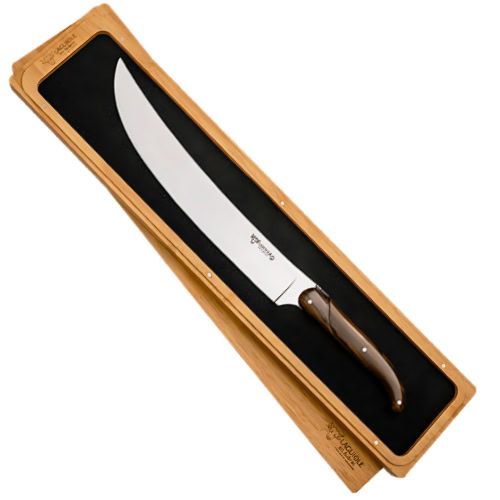
Few rituals capture celebration like a clean sabrage. The Laguiole champagne sabre uses a broad, usually blunt blade that glides along the bottle’s seam and strikes the collar so the cork departs with the glass ring in one elegant motion. The tradition reaches back to Napoleonic cavalry and salon culture; today it lives on at weddings, milestone birthdays and New Year’s Eve. Choose a handle to suit your bar—olivewood for warmth, juniper for subtle figure, horn for formal depth—and plan the moment properly: well-chilled bottle (about 4–6 °C), a clear outdoor line of flight, eye protection, and a smooth glide-then-strike rather than a chop. Most references include a protective case and authenticity documents; note that engraving is not available on sabres due to size constraints. After the toast, hand-wipe, dry and store in the case so polish and balance remain perfect for the next ceremony. Done well, sabrage is theatre with discipline—memorable, controlled and unmistakably French in spirit.
Oyster Knives — Safe Hinge Leverage & Coastal Style
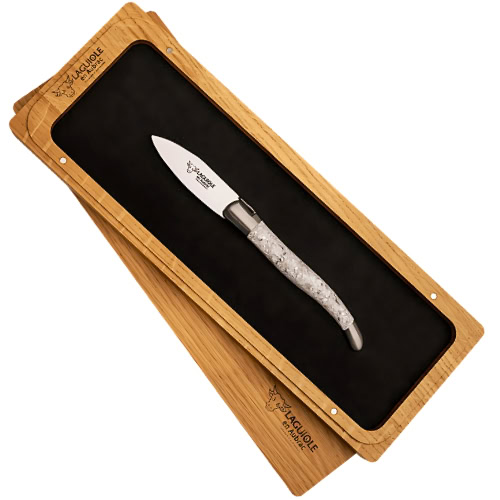
The best oyster opening is almost silent—the clean “pop” at the hinge, liquor intact, meat unbruised. A Laguiole oyster knife is built specifically for that moment: a short, rigid blade with a pointed tip that seats in the hinge and turns pressure into control. Polished bolsters support the grip, and a secure thumb rest keeps the wrist steady as you twist to unlock, then sweep to cut the adductor. Our UK selection adds a distinctive flourish with recycled seashell handles encapsulated in clear resin—mussel blues, oyster pearl greys or scallop sand tones—luminous on crushed ice and memorable as gifts. Safety is simple habit: a folded towel or glove, a stable board, and slow rotation rather than prying up, which can shatter shell. Rinse, dry, store the tip safely in its wooden box, and you are ready for Christmas platters, seaside weekends and Champagne pairings. Resin handles shrug off normal moisture; wood-style rules still apply—no soaking, no dishwasher, and a soft cloth to keep the polish bright. If you love seafood, this is the right tool, not a brave improvisation.
Butter Knives — Smooth Spreading & Table Styling
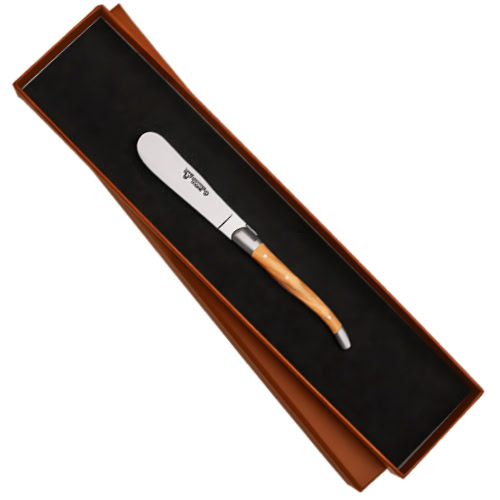
A great butter knife isn’t sharp; it’s assured. The rounded-tip Laguiole spreader carries flavour without scarring crumb, laying down an even film of butter, clotted cream or soft cheese with a single, calm motion. The shallow belly of the blade encourages a natural “scoop and smooth”, so toast, scones and crackers arrive at the plate looking composed rather than patched. Because butter service is visible, the handle sets the mood: olivewood glows on pale linens, juniper adds discreet texture, horn tip brings evening polish, while snakewood reads collector-grade and pistachio offers a cool contemporary note. For hosting, consider a neat row of four or six so each guest has their own—tidier plates, fewer shared jars, and a subtle “hotel-smart” rhythm. Presentation boxes earn their keep: they protect the edge, streamline set-up, and make gifting effortless for weddings, housewarmings and weekend guests. Maintenance is simple: handwash, dry promptly, and refresh wood with beeswax to seal the grain without greasiness. When you want everyday ease that still feels special, this is the quiet upgrade that pays off every morning.
Final Thought — Build a Cohesive Story from Prep to Presentation
Luxury at the table isn’t loud; it’s consistent. A spreader that behaves, a knife that tracks straight, a handle that feels right in the palm—these are the small decisions that add up to calm service and memorable meals. Start where you feel the pinch today: tidier toast, quieter pizza nights, safer oysters, smarter carving.
Match materials across categories for a disciplined line, or mix woods and horn for a collected-over-time look that feels personal. Keep care habits simple—gentle handwash, prompt drying, beeswax on wood, and safe storage—and your pieces will develop the soft patina that signals use, not wear.
Each section above links to a focused UK guide with buying checklists, styling notes and, where needed, safety steps. Choose deliberately, add gradually, and let your table tell the same story from breakfast to celebration: handmade in France, selected for the UK, and made to be used.